
If there is one dining experience that defines Cyprus, it is the meze. More than a meal, a Cypriot meze is a social ritual — a leisurely procession of small dishes that unfolds over hours, punctuated by conversation, laughter, and the clinking of glasses filled with zivania or local wine. Whether you are visiting Paphos, Limassol, Larnaca, or a quiet village in the Troodos Mountains, sitting down to a proper meze is one of the most authentic and memorable things you can do on the island.
This guide covers everything you need to know: what meze actually is, what dishes to expect, where to eat it, how much it costs, and the etiquette that will make you feel like a local.
What Is Cyprus Meze?
The word meze comes from the Persian word maze, meaning taste or relish. Across the Eastern Mediterranean and Middle East, small shared plates go by similar names — mezze in Lebanon, meze in Turkey and Greece. But the Cypriot version is distinctly its own thing.
A full Cypriot meze is not a starter or a side dish selection. It is the entire meal — a structured, generous, deeply communal feast that can consist of anywhere from 20 to 40 individual dishes served in a sequence. First come the cold starters: dips, salads, olives, and cheeses. Then the hot starters arrive: grilled halloumi, fried calamari, sheftalia. Finally, the main courses appear: grilled meats, stews, fish, and roasted vegetables. Throughout it all, bread keeps coming, and the conversation never stops.
The genius of meze is that it is designed for sharing and for time. In Cyprus, eating is not something you rush. A proper meze lunch can last three or four hours, and nobody at the table considers that unusual.
The Cold Starters: Where Every Meze Begins
The first wave of dishes sets the tone for everything that follows. These are the cold meze dishes, served together in small bowls and plates.
Talatouri (Tzatziki)
Cyprus's version of tzatziki is made with thick strained yoghurt, cucumber, garlic, dried mint, and a drizzle of olive oil. It is cooler and mintier than its Greek counterpart, and it is the perfect companion for warm pita or bread fresh from the oven.
Hummus
Smooth, lemony, and generously drizzled with good olive oil, Cypriot hummus is a staple of any meze spread. Often topped with a dusting of paprika and a handful of whole chickpeas, it is deceptively simple and utterly satisfying.
Tahini
Sesame paste blended with lemon juice, garlic, and water into a silky dip. In Cyprus, tahini is eaten as a spread on bread or alongside grilled meats. It is also used in sweets — a sign of how deeply embedded it is in the local food culture.
Olives
Cyprus produces some of the finest olives in the Mediterranean. Look for the large, meaty Kalamata-style varieties marinated with coriander seeds and lemon, as well as the smaller, intensely flavoured cracked green olives seasoned with fresh herbs.
Halloumi (Cold)
Yes, halloumi appears in multiple forms during a meze. The cold version is sliced thin and served fresh — mild, squeaky, and delicious with a drizzle of olive oil and a sprinkle of dried mint. The grilled version comes later and is an entirely different experience.
Kolokasi Salad and Other Seasonal Vegetables
Depending on the season, you will find fresh tomato and cucumber salads, roasted beetroot with garlic yoghurt, boiled courgette with lemon, and various other vegetable preparations that reflect what is growing locally.
The Hot Starters: The Heart of the Meze
Once the cold dishes are on the table, the kitchen begins sending out the hot starters. This is where the meze really comes alive.
Grilled Halloumi
This is arguably Cyprus's most famous culinary export, and with good reason. When halloumi is grilled until golden on the outside and soft within, it develops a slightly salty, smoky flavour that is completely addictive. Squeeze a little lemon over it and eat immediately — halloumi waits for no one.
Loukaniko (Cypriot Sausages)
These pork sausages are flavoured with red wine, coriander seed, and sometimes dried citrus peel. They are grilled until slightly charred and served alongside pickled vegetables. Loukaniko have a depth of flavour unlike anything you will find in a standard supermarket sausage.
Sheftalia
Perhaps the most uniquely Cypriot item in any meze, sheftalia are small parcels of minced pork and lamb mixed with onion, parsley, and spices, wrapped in caul fat (the lacy membrane surrounding the stomach) and grilled over charcoal. The fat melts during cooking, basting the meat from the outside in, resulting in something incredibly juicy and flavourful.
Fried Calamari
Tender rings of squid, lightly battered and fried to a crisp, served with fresh lemon. When made with squid caught that morning — as is common in coastal villages — this dish is exceptional.
Lountza
Cured pork loin marinated in red wine and smoked over local herbs, lountza is one of Cyprus's great preserved meats. It is sliced thin and served grilled or pan-fried, with a distinctly smoky, wine-tinged flavour. It is frequently paired with halloumi in sandwiches, but as part of a meze, it stands alone magnificently.
Makaronia tou Fournou (Cypriot Pastitsio)
This baked pasta dish — layers of thick macaroni, spiced minced meat, and béchamel sauce — is Cyprus's answer to lasagne. Rich, comforting, and substantial, it is the kind of dish that appears at family tables and village tavernas alike.
The Main Courses: Where the Feast Reaches Its Peak
By the time the main courses arrive, the table is already crowded. But somehow, there is always room for what comes next.
Souvlaki
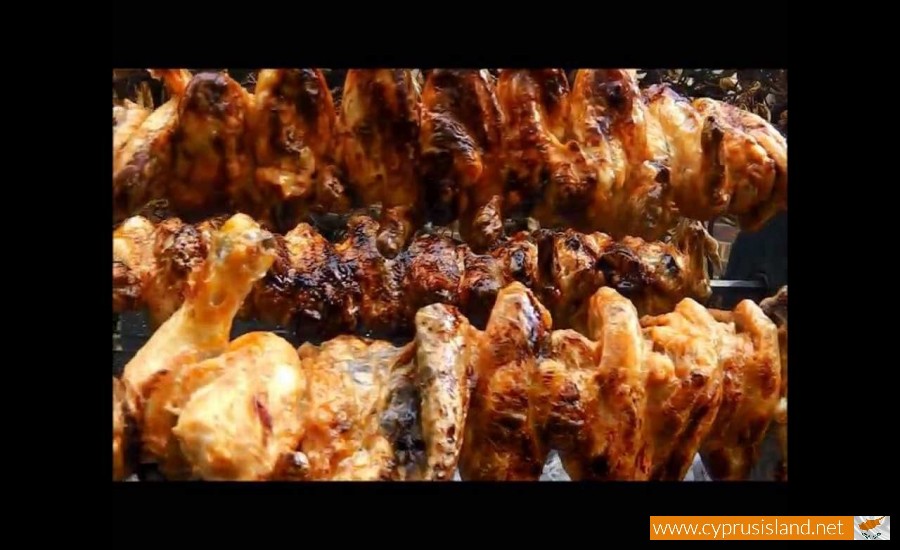
Skewers of marinated pork or chicken, grilled over charcoal and served with pita, fresh vegetables, and talatouri. Simple, perfectly executed, and utterly delicious.
Kleftiko
One of Cyprus's signature dishes: slow-cooked lamb (or sometimes goat), wrapped in parchment and baked in a traditional clay oven for hours until the meat falls from the bone. The name comes from the Greek word for thief — legend has it that shepherds would cook stolen lamb underground to hide the smoke. The result is extraordinarily tender, perfumed with garlic, bay leaves, and oregano.
Stifado
A hearty stew of beef or rabbit braised with pearl onions, red wine, cinnamon, cloves, and allspice. Stifado is deeply warming and complex — a dish that speaks of long afternoons in mountain villages when the air turns cool.
Afelia
Pork cooked slowly in red wine with whole coriander seeds until tender and fragrant. Often served with bulgur wheat or crushed potatoes, afelia is one of those dishes that reveals how much Cypriot cooking owes to its ancient spice routes.
Grilled Fish
At a fish meze — a variation of the standard spread focused on seafood — expect whole grilled fish like sea bream or sea bass, along with octopus, prawns, and various shellfish. Coastal restaurants in places like Zygi, Latchi, and Limassol's old harbour serve some of the finest fish meze in the Mediterranean.
The Sweets and the End of the Meal
No meze ends without something sweet. Often this means a plate of seasonal fresh fruit, a small glass of Cyprus glyko tou koutaliou (spoon sweets — fruits or nuts preserved in syrup), or a slice of galatopoureko (custard in crisp pastry).
A shot of zivania — Cyprus's fiery traditional spirit distilled from grape pomace — is the traditional way to close a meze. Clear, potent, and warming, zivania has been made in Cyprus for at least 600 years. Alternatively, a small cup of thick Cypriot coffee, brewed in a long-handled pot called a briki, signals that the feast is coming to a close.
Fish Meze vs. Meat Meze: What's the Difference?
When you sit down at a Cypriot taverna and ask for meze, you will typically be asked one question: fish or meat? The cold starters and many of the dips are the same regardless, but the main courses diverge dramatically.
A meat meze centres on pork, lamb, chicken, and beef — grilled, stewed, and baked. It is generally more rustic, more filling, and more closely associated with village cooking in the Troodos region.
A fish meze is the speciality of coastal towns and fishing villages. The focus is on the freshest seafood available that day — whole fish grilled over charcoal, octopus marinated in wine and grilled until tender, fried whitebait, and prawns baked in tomato sauce with feta. Fish meze tends to be slightly lighter and more elegant.
Some restaurants offer both, or will incorporate elements of each. The best approach is simply to ask what is fresh and what the kitchen is proud of that day.
Where to Eat Meze in Cyprus
Meze is available almost everywhere in Cyprus, but some places are particularly famous for it.
- Limassol: The old town area and the harbour district are full of excellent meze tavernas. The village of Omodos in the wine region also has superb rustic meze.
- Paphos: The harbour area and the villages of the Paphos hills — Kathikas, Droushia, Pano Akourdaleia — offer outstanding traditional meze experiences.
- Larnaca: The Finikoudes promenade and the old Turkish quarter have many meze options, with excellent fish meze available at seaside restaurants.
- Nicosia: The old walled city has a growing food scene, and traditional meze tavernas can be found in the Laiki Geitonia neighbourhood and beyond.
- Zygi: This small fishing village between Limassol and Larnaca is essentially a seafood meze destination — almost every restaurant in the village specialises in fish meze, and the quality is outstanding.
- Latchi: Near Polis on the Akamas Peninsula, this tiny harbour village is one of the best places in Cyprus for fish meze. The squid and octopus are legendary.
How Much Does Meze Cost?
Meze is excellent value for the quantity and quality of food involved. Expect to pay between €15 and €25 per person at most traditional tavernas. In tourist-heavy areas or upmarket restaurants, prices can reach €30 to €40 per person.
Some important things to know: meze is almost always priced per person, and it includes everything — you do not order individual dishes. Drinks (wine, beer, soft drinks, and sometimes zivania) are usually charged separately. Bread is always included.
For the full experience, budget for wine. Cyprus produces excellent local wines — ask for the house carafe of local red or white, often made from indigenous grape varieties like Mavro or Xynisteri, and you will not be disappointed.
Tips for Enjoying Meze Like a Local
- Come hungry. A meze is not a light meal. Skip breakfast, take a long walk first, and arrive with a genuine appetite.
- Come with company. Meze is fundamentally a social experience. It is best enjoyed with at least three or four people — more dishes get shared, more conversation flows.
- Eat slowly. The dishes arrive gradually over the course of the meal. There is no rush. Pace yourself on the bread and dips at the start, because the best dishes are still on their way.
- Ask what is in season. The best meze changes with the seasons. In spring, fresh artichokes and wild asparagus appear. In autumn, mushrooms from the Troodos forests and quince preserves. In summer, the tomatoes and courgettes are at their best.
- Try the zivania. Even if strong spirits are not usually your thing, one small glass of zivania at the end of a meze is a quintessentially Cypriot experience.
- Linger. Do not eat and leave. Order another carafe of wine. Have a coffee. Talk. This is what meze is for.
Vegetarian and Vegan Meze
While traditional Cypriot meze is heavily meat-focused, most tavernas can accommodate vegetarians with advance notice. The cold starters — hummus, tahini, talatouri, olives, halloumi, salads, and grilled vegetables — are naturally vegetarian and form a substantial spread on their own.
For vegans, the options narrow (halloumi is off the table), but a good chef can put together an impressive plant-based spread from grilled seasonal vegetables, legume dishes, olive oil-rich preparations, and fresh salads. It is always worth calling ahead to ask.
The Meze as a Cultural Experience
In Cyprus, the meze is not just food. It is an expression of hospitality, generosity, and the Cypriot philosophy of life. Locals call this spirit filoxenia — love of the stranger — and it manifests most purely at the table.
When a Cypriot family invites you to share a meze, or when a village taverna puts out dish after dish with genuine warmth and pride, you are experiencing something that has been passed down through generations. The recipes change slowly. The ritual barely changes at all.
If you visit Cyprus and do only one thing, let it be this: find a good taverna, sit down in the shade, order the meze, and let the afternoon take care of itself. You will understand Cyprus better after that meal than after any museum or guidebook.