Hidden just below the calm waters of Xyliatos Dam, Xyliatos Waterfall is one of those places that feels like a small reward for slowing down. It isn’t dramatic in a postcard sense, and it doesn’t roar year-round. Instead, it appears quietly, almost shyly, only when winter rain has been generous. And that’s exactly what makes it special.
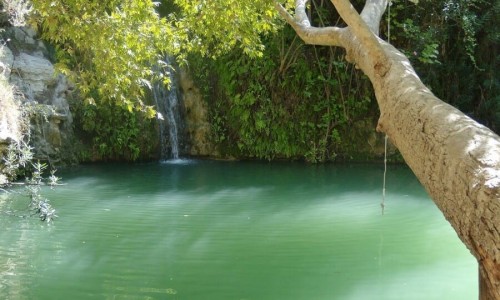
The waterfall forms along the Xyliatos River, where water slips over layered rock and tumbles into a shallow, clear pool. In winter and early spring, the flow is lively enough to transform the area into a miniature forest oasis. Moss brightens the stones, fallen leaves gather along the banks, and the air carries that unmistakable smell of wet earth and running water. It’s a side of Cyprus many people forget exists.
What makes Xyliatos Waterfall particularly charming is its setting. Tall trees frame the cascade, filtering light and creating a sense of enclosure, as if the waterfall belongs only to those who make the short walk down to it. The rocks around the pool are smooth and irregular, shaped slowly by water rather than force. On quiet days, the only sounds are trickling water, rustling branches, and the occasional birdcall echoing through the valley.
This is not a destination built for crowds. There are no signs pointing dramatically toward it, no railings, no platforms. Reaching it feels more like discovering something than visiting something. A walk from the picnic area or dam leads you closer to the riverbed, and from there the waterfall simply reveals itself. That sense of discovery is a big part of its appeal.
Seasonality defines the waterfall’s character. After heavy rains, it feels alive and expressive, water spilling over rock in several narrow streams that catch the light differently as the day moves on. The pool below reflects branches and sky, broken only by gentle ripples. In drier months, the flow weakens or disappears entirely, leaving behind exposed stone, damp earth, and the quiet path of the river. Even then, the place holds a calm presence, as if waiting patiently for water to return.
The surrounding landscape plays an important role in shaping the experience. Pines, shrubs, and deciduous trees mix together, creating a patchwork of textures and colours that change with the seasons. In winter, greens deepen and browns soften. In early spring, new growth pushes through the forest floor, and the riverbanks feel fresh and alive. The waterfall becomes part of a wider living system rather than a single focal point.
Because the waterfall sits so close to Xyliatos Dam, it offers an interesting contrast. Above, the dam represents control and stillness, a managed body of water held in place. Below, the river reclaims movement, slipping freely through rock and soil, shaping its path naturally. Standing near the waterfall, it’s easy to feel that balance between human intervention and nature’s quiet persistence.
The area encourages unhurried exploration. Visitors often move slowly, stepping carefully across stones, pausing to watch the water, or finding a spot to sit and listen. It’s common to see people return more than once, knowing that the waterfall never looks exactly the same twice. Light, rainfall, and season all leave their mark, subtly changing the scene.
Calling it Xyliatos Waterfall feels natural. The name may not be official, but it reflects how people experience it: as part of the wider Xyliatos landscape, shaped by the dam, the river, and the surrounding forest. Like many places in Cyprus, its identity has grown organically through shared experience rather than formal recognition.
Xyliatos Waterfall doesn’t try to impress. It doesn’t announce itself loudly or demand attention. Instead, it rewards those who arrive with curiosity and patience. It is a reminder that some of the island’s most meaningful natural moments happen quietly, on a small scale, and only for a short time each year. And when the water is flowing, standing there feels less like visiting a landmark and more like stepping briefly into a living, breathing corner of the landscape.
Near Xyliatos Waterfall
Other places within a short drive, closest first.