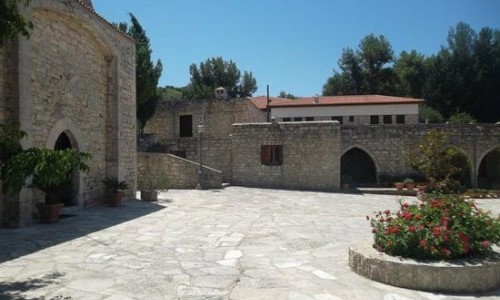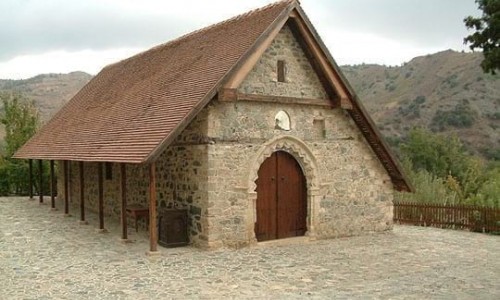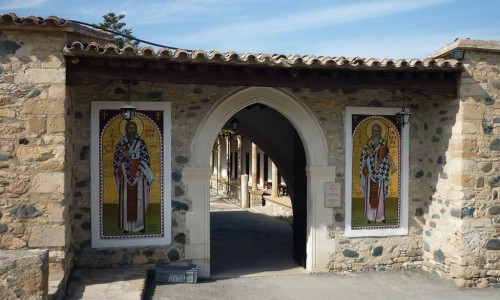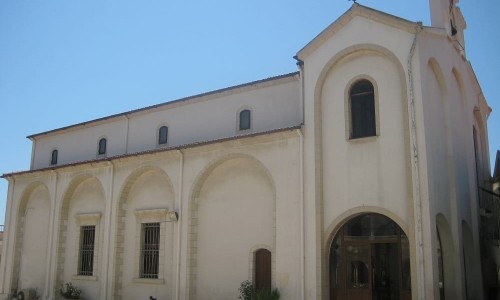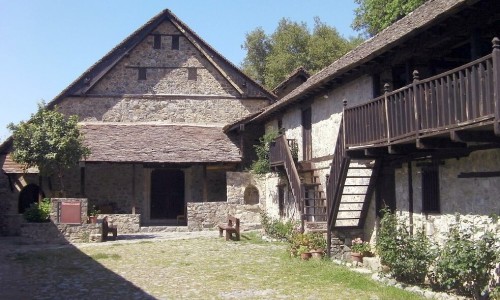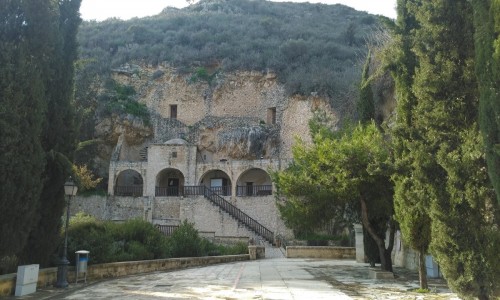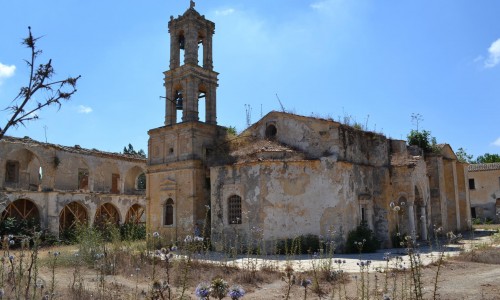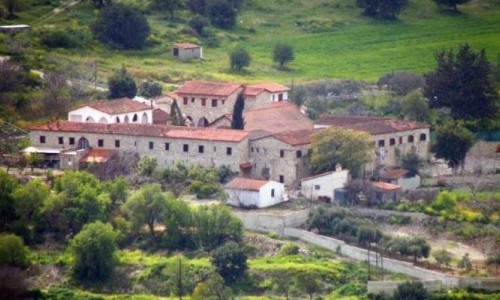
Monasteries sit differently in Cyprus than churches do. A village church belongs to its village; a monastery was usually founded somewhere deliberately remote, on a ridge or at the head of a valley, and the road to it was built afterwards. That is still how most of them feel. This site documents 25 monasteries, listed by district further down the page.
The mountain monasteries
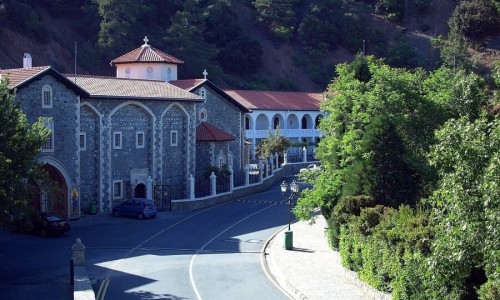
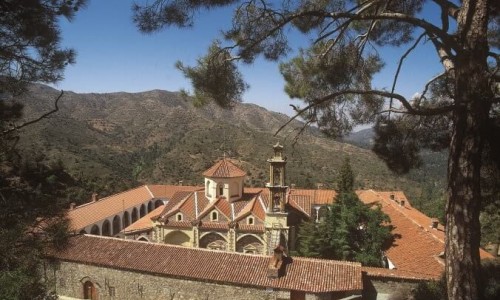
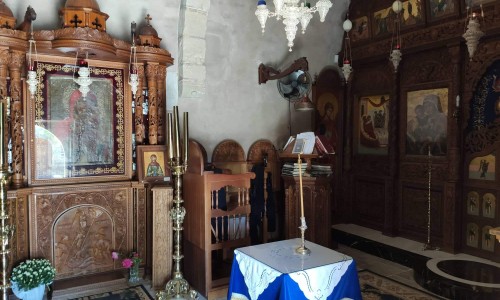
Kykkos Monastery is the wealthiest and best known on the island, founded in the eleventh century high in the Troodos above Pedoulas, and the one most visitors see. It is also the most decorated: mosaic and fresco cover almost every surface of the courtyards, most of it modern. Machairas Monastery stands on the eastern side of the range in far quieter forest, and Trooditissa sits above Platres among pines.
In the Marathasa valley, Agios Ioannis Lampadistis at Kalopanayiotis is the one to make time for. It is a complex of three churches under a single roof, and its wall paintings are of the same order as those in the painted churches of the surrounding villages.
Stavrovouni and the cats
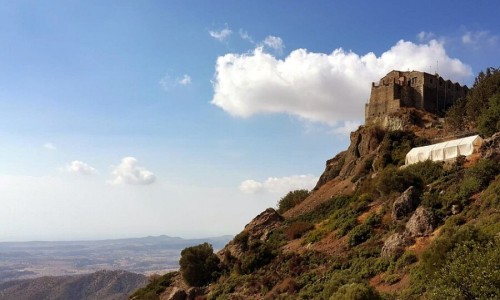
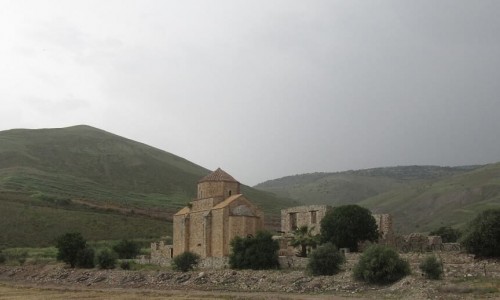
Stavrovouni stands alone on the summit of the mountain it is named for, in the Larnaca district, visible for a long way in every direction. The name means the mountain of the cross, and the monastery is dedicated to the Holy Cross: it is said to have been founded by St Helena, mother of Constantine the Great, who left one of the crosses she had recovered in the Holy Land behind on the island. It remains a strict working community rather than a visitor attraction, so check its rules before making the drive up.
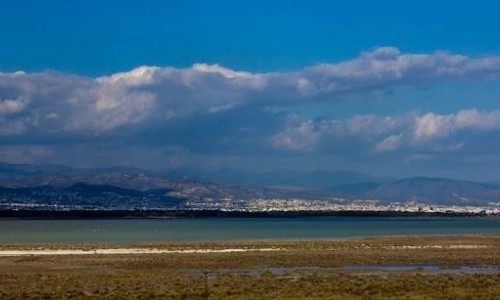
Near the salt lake on the Akrotiri peninsula, the Holy Monastery of St Nicholas of the Cats is the one everyone remembers. It takes its name from the colony of cats said to have been brought in to deal with snakes, and their descendants are still there in numbers.
In the east and the occupied north
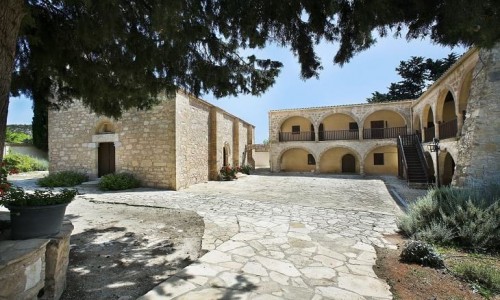
Ayia Napa Monastery is the strangest juxtaposition on the island: a walled monastery built around the fifteenth century, while Cyprus was under Venetian rule, sitting in the middle of the busiest nightlife resort in the country and still completely quiet inside. The great fig tree beside it is said to have been planted by the Venetian woman whose story is bound up with the founding. In the occupied north, Apostle Varnava Monastery near Famagusta and Agios Panteleimonas in the Kyrenia district are documented here but are no longer in religious use.
Visiting
Working monasteries are not attractions and it is worth arriving on those terms. Modest dress is required rather than encouraged — long trousers or a long skirt and covered shoulders — and several keep wraps at the gate for visitors who arrive without. Most close for a few hours in the middle of the day, and photography inside the churches is often restricted. Admission is generally free, though the larger foundations have a shop and a museum that are not.
For the island’s parish churches and chapels, see Cyprus churches and chapels.
All the monasteries on Cyprus Island
25 monasteries documented on this site, grouped by district. 25 of them are plotted on Cyprus in 3D.