
A waiter in a Larnaca taverna once handed my card machine back with a small shrug. "We don't expect it," he said, "but we don't refuse it either." That sums up tipping in Cyprus better than any guidebook rule ever could. Nobody will chase you down the street for leaving nothing, and nobody will look offended if you round up. But there are a few local habits worth knowing before your first bill arrives, especially the one about the "service charge" line that catches most visitors off guard.
The Service Charge Trap
Many restaurant menus in Cyprus carry a small note at the bottom: a 10% service charge is included. This has been standard practice on the island for years, and it means the bill you receive has effectively already been tipped for you. The catch, and it's a real one, is that this charge does not always reach the staff who served you. In some places it goes straight into the till as general revenue; in smaller family-run tavernas it's genuinely split among the team. There's no reliable way to tell which is which just by looking at the menu.
My own rule of thumb: if the service was good and I liked the place, I leave a bit more in cash regardless of what the printed bill says. A euro or two on the table, or rounding the card payment up, tells the person who actually poured your wine that it was for them.
Restaurants and Tavernas
Assuming the 10% charge is already on the bill, an extra 5-10% in cash for genuinely good service is generous and appreciated, not expected. If you had a long, leisurely meze with a table full of dishes and attentive staff topping up your wine, that's exactly the kind of meal where a cash tip lands well. For a quick coffee and sandwich at a beach kiosk, nobody bats an eyelid if you don't tip at all — rounding to the nearest euro is the norm.
Where there's no service charge at all, which is common in smaller village kavas and family tavernas away from the coast, 10% is a fair and welcome tip if you were happy with the meal.
Cafés and Bars
Cypriot coffee culture doesn't really run on tips the way restaurant culture does. Order a frappé or a Cyprus coffee at a street-side café and pay with a card, and it would be unusual to add anything. Cash payments are different: leaving the small change, fifty cents or a euro, is a common and appreciated habit rather than an obligation. Bars in Ayia Napa and Protaras that cater heavily to tourists have absorbed more of a British-style tipping culture, and bartenders there won't be surprised by a coin or two left on the counter.
Taxis
Cypriot taxi drivers don't expect tips as a rule, and meters are used honestly in the vast majority of cases, which is more than can be said for some Mediterranean destinations. Rounding the fare up to the nearest euro, or telling the driver to keep the change on a short trip, is the standard local gesture. If you've booked a driver for a full day, say for a run out to the Troodos villages or across to the Akamas, and they were helpful with directions, waited patiently, or carried bags, €5-10 for the day is a reasonable thank-you. If you're relying on buses and the odd taxi rather than renting a car, none of this will add much to your budget.
Hotels
Hotel tipping in Cyprus follows fairly familiar Mediterranean patterns, scaled to the level of the property. At larger resort hotels in Paphos, Limassol and Protaras, porters who carry bags to your room typically receive €1-2 per bag, and housekeeping appreciates €1-2 per day left in the room, ideally with a small note so it's clear it's meant for them rather than left behind by accident. At smaller family-run guesthouses, particularly inland, tipping is far less of a fixture, and a warm thank-you in person often matters more than cash.
Concierge staff who go out of their way — booking a table at a fully-booked restaurant, sorting out a car hire mix-up — are tipped in Cyprus much as anywhere else: €5-10 depending on the favour, and only if you feel it's warranted.
Tour Guides and Excursions
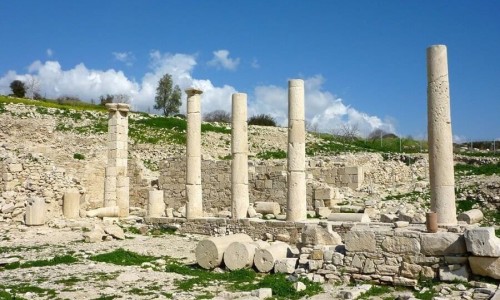
This is the one area where Cypriots themselves would tell you tipping is closer to an expectation than an option. Guides on organised day tours, whether it's an archaeological tour of Kourion or a boat trip along the Akamas coast, generally rely on tips as a meaningful part of their income, since tour operators often pay guides relatively modest base rates. €5-10 per person for a half-day tour, or €10-20 for a full day, is the customary range for a guide who was knowledgeable and personable. Drivers on the same trip, if separate from the guide, are typically tipped a smaller amount, around €2-5 per person.
Quick Reference
| Service | Typical Tip | Notes |
|---|---|---|
| Restaurant / taverna | 5-10% cash, on top of any service charge | Check if 10% is already on the bill |
| Café / coffee shop | Round up or leave small change | Rarely expected on card payments |
| Taxi | Round up to nearest euro | €5-10 for a full day's hire |
| Hotel porter | €1-2 per bag | Mainly at resort-scale hotels |
| Housekeeping | €1-2 per day | Leave with a short note |
| Tour guide | €5-20 per person | Higher end for full-day tours |
A Few Things That Trip Visitors Up
- Card machines in Cyprus rarely prompt you to add a tip the way American ones do, so if you want to leave one, you'll usually need small cash. Keep a few coins and low-value notes from your euro cash withdrawals for exactly this reason.
- Bargaining and tipping are two separate customs and shouldn't be confused. Haggling over price happens in some markets and with certain services, covered in our shopping guide, but it has nothing to do with what you leave afterwards for good service.
- In villages well off the tourist trail, offering a tip for a small favour, like a shopkeeper opening up early for you, can occasionally feel more awkward than welcome. Read the room; a thank-you and a smile often does more than coins.
None of this is rigid. Cyprus doesn't run on the same tipping anxiety you might feel in the United States, where service staff often depend on gratuities to make up their wages. Here it's closer to genuine appreciation for good service, offered on your own terms and never chased. Get the big-ticket ones right — restaurants, taxis, guides — and you won't go far wrong anywhere else.