Located near the ancient city of Salamis in the Ammochostos (Famagusta) district, the Monastery of Apostolou Varnava, also known as Saint Barnabas Monastery, is one of the most historically and spiritually significant religious landmarks in Cyprus. Dedicated to Saint Barnabas, the patron saint of Cyprus and one of the founding figures of the Cypriot Orthodox Church, this remarkable monastery represents centuries of Christian history, religious devotion, and cultural heritage. Its peaceful surroundings, traditional Byzantine architecture, and connection to the early spread of Christianity make it an important destination for visitors interested in exploring the island's fascinating past.
Situated approximately eight kilometres north of Famagusta, close to the archaeological remains of ancient Salamis, the monastery occupies a special place in Cypriot history. It is closely associated with the burial place of Saint Barnabas, whose missionary work alongside Saint Paul helped establish Christianity on the island during the first century AD. Although the monastery no longer operates as an active monastic community, its beautifully preserved buildings, religious artwork, archaeological collections, and sacred tomb continue to attract visitors and pilgrims from Cyprus and abroad.
Today, the monastery serves as both a religious landmark and a cultural attraction, offering visitors an opportunity to discover the history of early Christianity while appreciating one of the island's most distinctive ecclesiastical complexes.
The Life and Legacy of Saint Barnabas
The history of Apostolou Varnava Monastery is inseparable from the life of Saint Barnabas, one of the most important figures in the development of Christianity in Cyprus. Born in the ancient city of Salamis during the first century AD, Barnabas was originally named Joseph and came from a Jewish family belonging to the tribe of Levi. He later became associated with the early Christian community in Jerusalem, where he was recognised for his generosity, dedication, and missionary activities.
His fellow apostles gave him the name Barnabas, traditionally interpreted as the Son of Encouragement, reflecting his supportive character and contribution to the early Christian movement. He became a close companion of Saint Paul, accompanying him on missionary journeys that played an important role in spreading Christianity throughout the eastern Mediterranean.
Around AD 45, Barnabas and Paul travelled to Cyprus, beginning their missionary activities in Salamis before continuing across the island towards Paphos. According to the Acts of the Apostles, their journey included an encounter with the Roman proconsul Sergius Paulus, who became interested in their teachings. This event is widely regarded as an important milestone in the early Christian history of Cyprus.
Barnabas eventually returned to his homeland, where Christian tradition holds that he continued preaching and establishing religious communities. According to ecclesiastical accounts, he was later martyred in Salamis because of his missionary activities. His followers secretly buried his remains outside the ancient city, establishing the foundation of a religious tradition that would eventually lead to the construction of the monastery bearing his name.
Saint Barnabas remains one of the most revered religious figures in Cyprus, and his contribution to the establishment of Christianity is commemorated throughout the island.
The Discovery of the Tomb of Saint Barnabas
One of the most fascinating chapters in the history of Apostolou Varnava Monastery concerns the discovery of Saint Barnabas's burial place during the fifth century AD. According to Orthodox Christian tradition, the location of his tomb had been forgotten for several centuries following his martyrdom, leaving the whereabouts of his remains unknown.
The story describes how Archbishop Anthemios of Cyprus experienced a vision in which Saint Barnabas appeared to him and revealed the location of his burial place. Following the vision, the archbishop ordered an investigation of the indicated area, situated near the ancient city of Salamis.
During the excavation, a tomb was reportedly discovered beneath a carob tree. Inside were human remains believed to belong to Saint Barnabas, together with a manuscript of the Gospel of Matthew resting upon the body. The discovery was interpreted as a miraculous event and became one of the most significant traditions in the history of the Cypriot Orthodox Church.
Archbishop Anthemios subsequently travelled to Constantinople, where he presented the discovery to the Byzantine Emperor Zeno. According to ecclesiastical tradition, the emperor recognised the significance of the findings and confirmed the independent status of the Church of Cyprus, reinforcing its position within the wider Orthodox Christian world.
The event is closely associated with the recognition of the Church of Cyprus as an autocephalous church, meaning that it possesses the authority to govern its own religious affairs without being subject to another patriarchate. Although the church's independence had already been affirmed by the Council of Ephesus in AD 431, the discovery of Saint Barnabas's tomb became an important symbol of its apostolic origins and ecclesiastical identity.
The Foundation and History of Apostolou Varnava Monastery
Following the discovery of Saint Barnabas's burial place, Emperor Zeno provided financial support for the construction of a religious complex dedicated to the saint. The original monastery is traditionally dated to approximately AD 477, making the location one of the oldest Christian pilgrimage sites associated with the island's religious history.
The earliest church was constructed as a Byzantine basilica, providing a place where worshippers could honour Saint Barnabas and commemorate his contribution to Christianity. Over the following centuries, the monastery underwent several phases of construction, destruction, restoration, and architectural development as Cyprus experienced different periods of political and religious change.
During the seventh century, the original religious complex suffered damage associated with Arab raids that affected many coastal settlements and religious sites across Cyprus. Subsequent rebuilding transformed the monastery, incorporating elements of the earlier structures into later Byzantine designs.
The complex underwent further changes during the medieval period, gradually developing into an important religious centre for the surrounding region. Its present appearance largely reflects substantial restoration and rebuilding carried out in 1756 under Archbishop Philotheos during the Ottoman period.
These eighteenth-century renovations helped establish the monastery's distinctive architectural character, including its church, surrounding monastic buildings, and enclosed courtyard. The result is an impressive religious complex that combines elements from different historical periods while retaining the traditional atmosphere of an Orthodox monastery.
For generations, Apostolou Varnava Monastery remained an important destination for pilgrims and worshippers, particularly those wishing to visit the saint's tomb and honour the spiritual founder of the Cypriot Church.
Architecture and Monastic Surroundings
The architectural character of Apostolou Varnava Monastery is among its most appealing features. Built around a spacious courtyard, the complex reflects traditional Cypriot monastic design, with the main church occupying a prominent position and surrounding buildings providing accommodation and facilities for the former monastic community.
The monastery church is distinguished by its pale stone exterior, tiled roofing, and two characteristic domes, which create an elegant silhouette against the surrounding countryside. Its architectural appearance reflects Byzantine influences, while later modifications demonstrate the changing construction techniques and artistic traditions that developed throughout the island's history.
The interior of the church preserves an atmosphere of religious significance, with Orthodox iconography and decorative elements illustrating the importance of Saint Barnabas within the Christian tradition. Religious paintings depict episodes from his life, missionary activities, and the legendary discovery of his burial place, providing visitors with a visual introduction to the monastery's historical and spiritual background.
The surrounding courtyard contributes greatly to the character of the complex. Its stone-paved pathways, traditional arches, and enclosed layout create a peaceful environment that recalls the monastery's former role as a place of prayer and contemplation.
The monastic buildings surrounding the courtyard once provided accommodation for monks and supported the daily activities of the religious community. Today, these historic spaces have been adapted for cultural and museum purposes, allowing visitors to appreciate their architectural features while exploring the collections displayed within them.
Together, the church, courtyard, and adjoining buildings form a remarkable example of the island's ecclesiastical architecture, demonstrating how religious structures can preserve the architectural influences of several historical periods.
The Tomb and Chapel of Saint Barnabas
Among the monastery's most important attractions is the small chapel containing the traditional burial place of Saint Barnabas. Located a short distance from the main monastery complex, this sacred location remains closely associated with one of the most significant stories in Cypriot Christianity.
The chapel stands above an underground burial chamber traditionally identified as the saint's tomb. Visitors can descend into the chamber, where the enclosed space and simple religious surroundings create an atmosphere of contemplation.
According to tradition, this is the location where the remains of Saint Barnabas were discovered during the fifth century, accompanied by the manuscript of the Gospel of Matthew. The discovery became central to the monastery's establishment and continues to hold considerable importance within the Orthodox Christian tradition.
Although the identification of the burial place belongs to longstanding ecclesiastical tradition, the site remains an important symbol of Cyprus's early Christian heritage. Its significance extends beyond its physical appearance, representing the historical relationship between Saint Barnabas, the Church of Cyprus, and the establishment of Christianity on the island.
For many visitors, the tomb is the most meaningful part of the monastery complex, providing a direct connection with the religious traditions that have shaped Cyprus for nearly two thousand years.
The Icon Museum
Today, the former church of Apostolou Varnava Monastery houses an Icon Museum, displaying a collection of Orthodox religious artwork that reflects the artistic and spiritual traditions of Cyprus. The museum provides an interesting opportunity to explore the role of religious imagery in Orthodox Christianity while appreciating the craftsmanship of icon painters from different historical periods.
The collection includes depictions of Christ, the Virgin Mary, apostles, saints, and important biblical events. These religious images illustrate the distinctive artistic conventions of Byzantine and post-Byzantine iconography, characterised by symbolic compositions, expressive figures, and carefully arranged colours.
Icons have traditionally played an essential role in Orthodox religious practice, serving as objects of veneration and visual expressions of Christian teachings. Their importance extends beyond artistic decoration, as they represent a connection between religious belief, cultural identity, and centuries of ecclesiastical tradition.
Within the museum, visitors can observe differences in painting techniques, religious themes, and artistic styles, gaining an appreciation of the development of Cypriot religious art. The surrounding architecture of the former church enhances the experience, allowing the collection to be viewed within a historical environment that was originally designed for worship.
The Icon Museum is an important feature of the monastery's present-day identity, helping preserve and display elements of Cyprus's Orthodox artistic heritage.
The Archaeological Museum
In addition to its religious significance, Apostolou Varnava Monastery houses an Archaeological Museum within the former monastic buildings surrounding the courtyard. The museum offers visitors an insight into the ancient history of Cyprus, complementing the monastery's Christian heritage with archaeological material from earlier periods.
Its collections include pottery, ceramics, ancient vessels, decorative objects, and other artefacts associated with different stages of the island's historical development. These exhibits demonstrate the richness of Cyprus's archaeological heritage and reflect the cultural influences of the civilisations that inhabited the island throughout antiquity.
The monastery's proximity to ancient Salamis makes the archaeological collection particularly relevant. Salamis was one of the most important ancient cities in Cyprus, serving as a major political, commercial, and cultural centre for many centuries. Its archaeological remains reveal the influence of Greek, Roman, and Byzantine civilisations, providing valuable context for understanding the historical environment in which Saint Barnabas lived.
By combining archaeological exhibitions with religious artwork and historic architecture, the monastery offers an experience that extends beyond conventional sightseeing. Visitors can explore different periods of Cypriot history within a single location, appreciating the relationship between the island's ancient civilisations and its later Christian traditions.
Apostolou Varnava Monastery After 1974
The monastery's modern history reflects the wider political and social changes experienced by Cyprus during the twentieth century. Following the events of 1974 and the division of the island, Apostolou Varnava Monastery remained in the northern part of Cyprus, where its religious activities gradually came to an end.
The monastery continued to be inhabited by three monks for a short period after 1974. However, the last members of the monastic community departed in 1976, bringing an end to its continuous use as an active monastery.
The historic buildings were subsequently preserved and adapted for museum purposes, allowing the complex to remain accessible to visitors. Restoration work undertaken during the early 1990s helped conserve its architectural character and establish the museum collections that visitors can explore today.
Although its original religious function has changed, Apostolou Varnava Monastery continues to hold substantial importance for the Orthodox Christian community. Its historical associations, religious artwork, and traditional burial place of Saint Barnabas ensure that it remains a meaningful part of Cyprus's ecclesiastical heritage.
The preservation of the site also provides an opportunity for visitors from different backgrounds to appreciate the cultural and architectural achievements associated with the island's long history.
Religious Importance and the Feast of Saint Barnabas
Saint Barnabas occupies a unique position in Cypriot Orthodox Christianity because of his association with the establishment of the island's earliest Christian communities. His missionary activities and connection with the Church of Cyprus have made him a central figure in the island's religious identity.
His feast day is celebrated annually on 11 June, when Orthodox Christians commemorate his life, missionary achievements, and martyrdom. The occasion holds particular importance within the Cypriot Church, reflecting the enduring respect for the apostle as its spiritual founder and patron saint.
Throughout Cyprus, churches and religious institutions dedicated to Saint Barnabas preserve his memory through liturgical celebrations, religious traditions, and artistic representations. Apostolou Varnava Monastery near Salamis remains one of the most important physical locations connected with his legacy, particularly because of the traditional identification of his burial place.
Beyond its religious associations, the monastery demonstrates the importance of early Christianity in shaping the cultural development of Cyprus. Its history illustrates the relationship between religious institutions, Byzantine imperial authority, and the emergence of a distinctive Cypriot ecclesiastical identity.
Exploring the Surrounding Area of Salamis
A visit to Apostolou Varnava Monastery can easily be combined with an exploration of the surrounding historical attractions, particularly the impressive archaeological site of ancient Salamis. Located only a short distance from the monastery, Salamis offers a remarkable insight into the ancient civilisations that once flourished along the eastern coast of Cyprus.
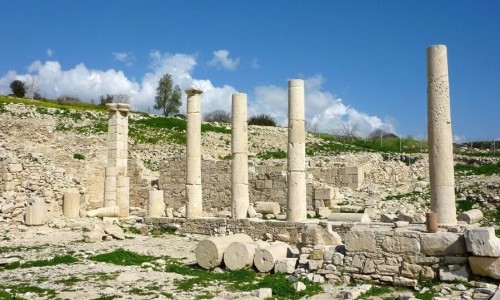
The archaeological site contains the remains of an extensive ancient city, including a Roman gymnasium, theatre, public baths, columns, mosaics, and other monumental structures. Walking through these ruins provides an opportunity to appreciate the scale and sophistication of one of Cyprus's most influential historical settlements.
The monastery is also located near the ancient settlement of Enkomi, an important Bronze Age centre associated with the island's early commercial and cultural development. The area's archaeological importance makes it particularly attractive to visitors interested in exploring the relationship between Cyprus's prehistoric, classical, and Byzantine past.
Famagusta itself offers numerous additional attractions, including its historic fortified walls, medieval architecture, impressive Gothic monuments, and traditional urban landscape. Combining the monastery with these nearby landmarks creates an interesting cultural excursion that reveals several different chapters of the island's history.
The surrounding countryside also contributes to the experience, with its open fields, Mediterranean vegetation, and relatively quiet rural roads providing a pleasant contrast to the region's larger settlements.
Visiting Apostolou Varnava Monastery
For those interested in discovering Cyprus's religious and archaeological heritage, Apostolou Varnava Monastery offers an enriching experience. Its accessible location near Famagusta and ancient Salamis makes it a convenient destination for visitors exploring the eastern part of the island.
The monastery complex provides several attractions within a relatively compact area, allowing visitors to explore the historic church, admire the religious artwork displayed in the Icon Museum, discover archaeological collections, and visit the traditional burial place of Saint Barnabas.
The peaceful courtyard and surrounding architecture also make the monastery particularly appealing to photography enthusiasts. Its distinctive domes, stone arches, traditional buildings, and historic atmosphere provide numerous opportunities to capture the beauty of Cypriot religious architecture.
Visitors who appreciate history will find the monastery especially interesting because of its connection with the earliest Christian communities on the island. The combination of religious tradition, Byzantine architecture, and archaeological exhibitions creates an educational experience suitable for a wide range of interests.
Although the complex operates primarily as a museum rather than an active monastery, visitors are encouraged to approach its religious spaces respectfully, recognising their continuing significance within the Orthodox Christian tradition.
A Timeless Symbol of Cyprus's Christian Identity
Apostolou Varnava Monastery stands as one of the most meaningful religious landmarks in the Ammochostos district, preserving an extraordinary connection with the origins of Christianity in Cyprus. From the missionary activities of Saint Barnabas and Saint Paul to the traditional discovery of the apostle's tomb and the establishment of the monastery during the Byzantine period, its history encompasses some of the most important developments in the island's religious heritage.
Its impressive architecture, peaceful surroundings, religious artwork, and archaeological collections provide visitors with a comprehensive introduction to the cultural traditions that have shaped Cyprus over many centuries. The monastery's continued preservation also demonstrates the importance of safeguarding historic monuments, ensuring that future generations can appreciate their architectural, spiritual, and educational value.
Whether visited for its religious significance, fascinating history, beautiful architecture, or proximity to the ancient city of Salamis, Apostolou Varnava Monastery offers a memorable journey through the island's past. More than simply a historic religious complex, it remains an enduring symbol of Cyprus's Christian roots, cultural identity, and remarkable historical legacy.
Near Monastery of Apostolou Varnava
Other places within a short drive, closest first.