
Drive the back roads between Kalavasos and Vavla in September and you will catch it before you see it: a smell somewhere between dark chocolate and hay, drifting from stone yards where farmers have tipped out sacks of long brown pods to dry in the sun. This is carob season in Larnaca's hill villages, and for most of the twentieth century, that smell meant money. Cyprus once shipped so much of the stuff that people called it "black gold" — for a while it ranked as the island's second export after copper, ahead of wine and ahead of citrus.
Most visitors never hear the word. It does not show up on restaurant menus the way halloumi or kleftiko does, and the trees themselves — low, dark-leaved, evergreen — blend into the hillsides rather than announcing themselves the way an orange grove or a vineyard does. But carob shaped whole villages here, and it is quietly making a comeback as a health food. It deserves a proper look.
What Is Carob, Exactly?
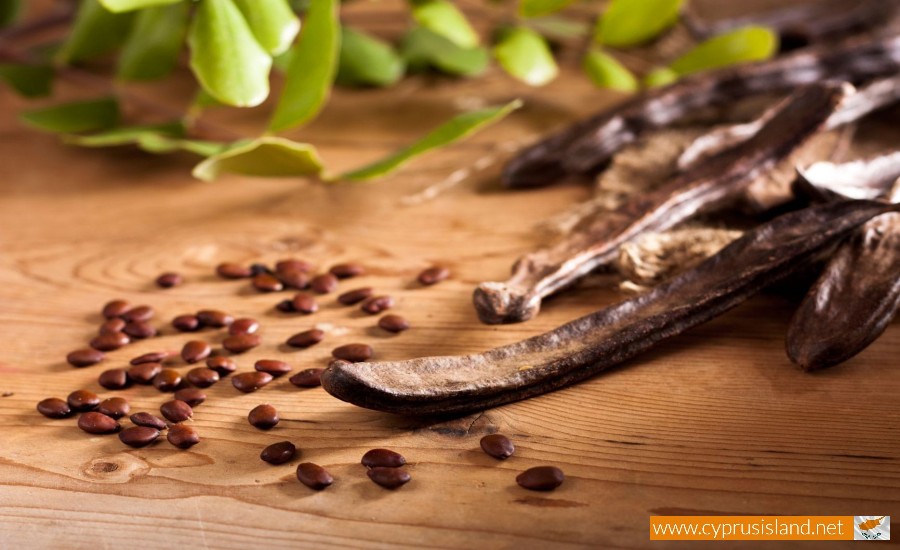
The carob tree (Ceratonia siliqua, χαρουπιά in Greek) is a tough, drought-resistant evergreen that has grown wild across the eastern Mediterranean for millennia. It needs almost no water once established, tolerates poor rocky soil, and produces long, flat, leathery pods that ripen from green to a deep glossy brown by late summer. Inside, the pulp is naturally sweet and the seeds are famously uniform in weight — so uniform that ancient traders used them to weigh gold and gemstones, which is where the word "carat" comes from.
In Cyprus the tree grows thickest across the southern foothills: the Larnaca district around Vavla, Ora, Kalavasos and Choirokoitia, plus pockets of the Limassol countryside. Walk the Vavla nature trail in early autumn and you will pass trees that have clearly been harvested for generations, their lower branches worn smooth where pickers have climbed or beaten the pods down with long poles.
Cyprus's Black Gold
The nickname was not marketing. From the late Ottoman period through the mid-twentieth century, carob was one of Cyprus's most valuable exports, shipped in bulk to Britain and northern Europe, where it was used mainly as animal feed and in industrial gum production. Villages across Larnaca and Limassol built part of their economy around it: families owned carob trees the way others owned vineyards, and the harvest was a communal event that pulled whole extended families back to the village every September.
Limassol's old harbour still shows the scale of the trade. The long stone warehouses along the seafront, now restored as the Carob Mill complex of restaurants, shops and a small museum, once stored thousands of tonnes of pods awaiting shipment. It is worth ten minutes even if you are not planning to eat there — the museum section explains the old milling process with the original machinery still standing, belts, grinders and all.
The trade fell away fairly quickly once cheap sugar and synthetic thickeners took over export markets in the 1960s and 70s. Trees were left unharvested for years, and for a generation carob became something older Cypriots remembered rather than something anyone actually bought.
From Pod to Syrup
Traditional processing has barely changed. Pods are dried, crushed and boiled in water until they release their sugars, then the liquid is strained and reduced slowly over heat until it thickens into a dark, treacly syrup called charoupomelo — carob honey, more or less, though no bees are involved anywhere in the process. It is used the way Cypriots use grape must syrup (epsima) or actual honey: drizzled over yoghurt, stirred into tea, poured over galaktoboureko, or eaten straight off a spoon as a children's snack that predates any jar of chocolate spread.
The pods are also ground into a fine, dark flour that is naturally caffeine-free and tastes faintly of cocoa — close enough that it gets sold as a chocolate substitute in health-food shops, though anyone expecting an exact match will be disappointed. It works better on its own terms, folded into cakes and biscuits, or pressed into the flat, chewy carob bars sold at village markets.
Where to Try It
You do not need to search hard. Larnaca and Limassol supermarkets stock bottled carob syrup on the same shelf as the honey, usually somewhere between €5 and €9 for a 250–500ml bottle depending on the producer. Quality varies more than the price suggests, though: mass-market bottles can taste thin and over-caramelised, while syrup from a named village producer, bought at a Saturday farmers' market or a village kiosk, tends to be thicker and considerably more complex. If a label does not say who made it or where, I would keep looking.
For the fuller picture, Kato Drys, a small Larnaca village built almost entirely from stone, has a modest local agriculture museum that covers carob alongside olive oil and silk production — a good stop if you are already in the village for its other small museums. Vavla and neighbouring Ora still have working trees you will pass on the marked nature trails, and September is when you actually catch the harvest happening rather than just hearing about it afterwards.
| Product | What it is | How it is used |
|---|---|---|
| Charoupomelo (carob syrup) | Reduced, treacly syrup boiled down from the pods | Over yoghurt, in tea, on fresh bread |
| Carob flour | Ground, dried pods | Baking, as a cocoa substitute |
| Carob bars | Pressed pulp and seeds, sometimes mixed with sesame | Snack, sold at village markets |
Worth the Detour
Carob will never have the profile of halloumi or Commandaria. It does not photograph well, and there is no polished tasting-room experience built around it the way there is for Cyprus wine. But that is part of what makes it interesting. This is a crop that quietly built villages, very nearly disappeared as an industry within a single generation, and is now edging back through health shops and Saturday markets rather than through tourism. Buy a bottle of syrup from an actual village stall rather than an airport gift shop, and you are tasting something much closer to what carob was always meant to be.