
Stand on the perimeter track at Larnaca Salt Lake on a clear morning in January and you will likely spot the flamingos before you have finished parking the car - a long pink smudge wading through a few centimetres of brine, utterly indifferent to the aircraft climbing out of the airport behind them. It is one of the more improbable wildlife sights in the Mediterranean, and most visitors to Cyprus never know it is there.
Cyprus sits on one of the busiest migratory flyways between Europe, Asia and Africa, which makes it disproportionately good for birdwatching given its size. You do not need specialist gear or weeks of planning. A pair of binoculars, an early start and a rough idea of where to point them will get you a very long way.
Why the Island Punches Above Its Weight
The reason is geography rather than luck. Every spring and autumn, hundreds of thousands of birds funnel through Cyprus on their way between African wintering grounds and European breeding sites, using the island as a stepping stone across open water. Add a resident population that includes several species found nowhere else on earth - the Cyprus warbler and the Cyprus wheatear among them - and a scattering of wetlands that punch well above their size, and you have a destination that serious birders quietly rate far higher than its beach-holiday reputation suggests.
None of this requires a trip to the Troodos backcountry. Some of the best sites are a short drive, or in one case a fifteen-minute walk, from the main coastal resorts.
Where to Go

Larnaca Salt Lake
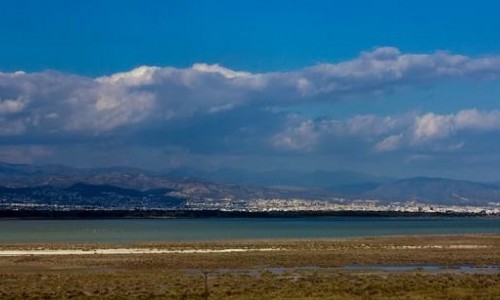
This is the easiest introduction. Larnaca Salt Lake floods with winter rain and draws greater flamingos from roughly November through to March, with numbers often running into the thousands by January. Black-winged stilts, avocets and the odd glossy ibis work the shallows alongside them. The lake sits right next to the airport, so you get the slightly surreal experience of watching flamingos take off in formation while a jet does the same a few hundred metres away. Park near the Hala Sultan Tekke mosque and walk the perimeter path; no permit or fee is needed.
Akrotiri Peninsula and Salt Lake
The Akrotiri Peninsula near Limassol is the heavyweight site. Its salt lake, marshes and the scrubland around Lady's Mile beach form a Ramsar-listed wetland that regularly out-counts Larnaca for species diversity, if not always for sheer flamingo spectacle. Part of the peninsula lies within the Akrotiri Sovereign Base Area, still administered by the British military, though the salt lake and coastal tracks are open to the public and well used by dog walkers and cyclists as well as birders. Spoonbills, purple herons and marsh harriers are regular, and the reedbeds hold reed and Cetti's warblers through spring. BirdLife Cyprus runs an information point nearby and occasionally leads guided walks worth checking for in advance.
Cape Greco
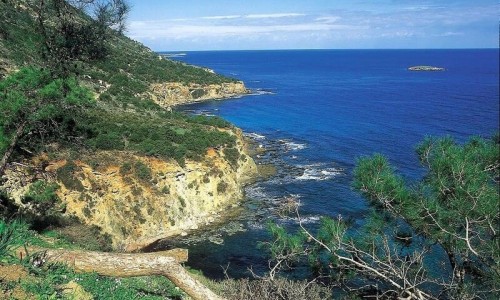
At the opposite end of the island, the limestone headland at Cape Greco works differently: rather than a wetland, it is a funnel point where migrating raptors and passerines cross the coast on their way south in autumn. Honey buzzards, harriers and the occasional eleonora's falcon pass overhead in September and early October, particularly after a north wind has pushed them toward the coast. The environmental centre at the park entrance has decent background information and clean facilities, which is more than most birding sites in Cyprus can claim.
Athalassa and the Inland Sites
Nicosia's Athalassa National Forest Park is the least glamorous option and, for that reason, one of the more rewarding for a quiet hour away from the coast. Its reservoir and woodland hold Cyprus's endemic warbler and wheatear alongside hoopoes, bee-eaters and golden orioles in season, and it is close enough to the capital for a lunchtime detour if you happen to be based inland rather than at the beach.
What You'll Actually See, By Season
| Season | Highlights | Best sites |
|---|---|---|
| Winter (Nov-Mar) | Greater flamingo, avocet, black-winged stilt | Larnaca Salt Lake, Akrotiri |
| Spring (Mar-May) | Warblers, bee-eaters, passing raptors | Akrotiri, Cape Greco |
| Summer (Jun-Aug) | Cyprus warbler, Cyprus wheatear (both resident) | Troodos foothills, Athalassa |
| Autumn (Sep-Oct) | Honey buzzard, harriers, falcons | Cape Greco |
A Less Comfortable Fact Worth Knowing
It would be dishonest to write about Cyprus and migratory birds without mentioning trapping. Illegal netting and limesticks used to catch small songbirds for the black-market dish ambelopoulia still occur in parts of the island, particularly around the Famagusta district and inside sections of the Dhekelia Sovereign Base Area, despite decades of EU pressure and enforcement campaigns by groups such as BirdLife Cyprus and the Committee Against Bird Slaughter. It has nothing to do with the legitimate wetlands listed above, which are safe, open and actively protected, but it is the kind of context a visiting birder should have rather than discover by accident.
Practical Notes
- Timing: go early. By 9am in spring and summer the heat haze over open water makes distant birds impossible to identify, and much activity has already quietened down.
- Kit: a mid-range pair of binoculars covers almost everything here; a scope only earns its weight at Larnaca and Akrotiri, where birds sit well out on open water.
- Guided walks: BirdLife Cyprus posts occasional public walks at Akrotiri and Larnaca on its website - worth a look before you travel, since they know the current hotspots better than any guidebook.
- Combine it with the coast: both salt lakes are close enough to Larnaca and Limassol that a dawn birding session and an afternoon on the beach fit comfortably into the same day, which is more than can be said for most wildlife-watching in the Mediterranean.
Cyprus was never built or marketed as a birdwatching destination, and that is precisely what makes it work. There are no queues, no hides booked out months in advance, no entrance fees at the gate. Just a salt lake, a pair of binoculars, and, if the timing lines up with your holiday as it does for a good four months of the year, several thousand flamingos going about their business as if the airport behind them were not there at all.