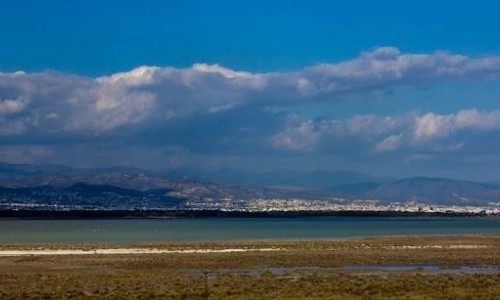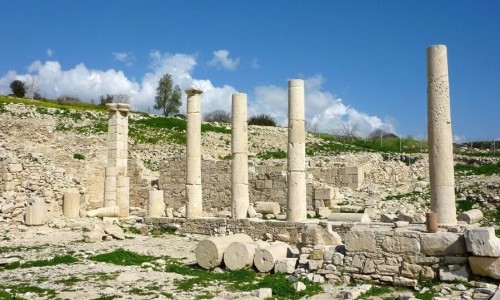

Famagusta, in Greek Ammochostos, is a town on the eastern coast of Cyprus, on the bay that carries its name. It is the capital of the Ammochostos district and has around 40,000 residents. The name is recorded from the 4th century AD and means, literally, the town covered in sand. Between 1960 and 1974 it was internationally known as a tourist resort built on that sand; the Greek Cypriot residents were evicted in 1974 by the Turkish army.
The town sits on low-lying, productive land. Wheat, vines, citrus and olives are the main crops, with a small amount of cotton. Its harbour is one of the best natural ports in Cyprus and the only enclosed one, and until 1974 it was the island's principal outlet for agricultural exports.
Origins
Famagusta is one of the oldest towns on the island. It was founded in the 3rd century BC by the Ptolemies and named Arsinoe, after Arsinoe II Philadelphus, the Greek queen of Egypt of the Hellenistic period. It later carried the names Konstantia and, in its Frankish form, Famagusta.
It was in effect the successor to Salamis, the most important city of ancient Cyprus, which in Greek mythology was founded after the Trojan War by Teucer, son of Telamon and brother of Ajax, from the Greek island of Salamis.
The Byzantine period
The town grew considerably under the Byzantine emperor Justinian, who built extensively there in honour of his wife's birthplace; the residents renamed the city New Justiniana in gratitude. In 647 AD, when the surrounding cities were destroyed in the Arab raids, their populations moved to Ammochostos, and the city expanded again.
When the Holy Land fell to the Arabs, Christian refugees arrived in numbers, and Famagusta became a significant Christian centre and one of the more important cities of the eastern Mediterranean.
Under the Franks
Famagusta reached its peak under Frankish rule, particularly through the 13th and 14th centuries. Enclosed by heavy walls, it was the greatest port in the eastern Mediterranean and one of the wealthiest cities anywhere. Venetian, Pisan, Neapolitan, Catalan, Syrian and other merchant communities settled there, and the city became a major transfer point between East and West.
That trade paid for palaces and churches, of which the Gothic cathedral of Saint Nicholas is the outstanding survivor — the Frankish kings of Cyprus were crowned there as kings of Jerusalem. Richard the Lionheart took the town first; the Lusignans followed. The Genoese seized it in 1373 and held it for nearly a century.
The Venetians and Othello
After the Venetians took the town in 1489 they fortified it heavily and made it their command centre for the eastern Mediterranean. Tradition places the ending of Shakespeare's Othello in its tower; Othello is thought to have been modelled on Christopher Moro, a Venetian officer who commanded Famagusta between 1505 and 1515.
The Ottoman siege
Famagusta resisted the Ottoman invasion of 1570 through a siege lasting eleven months, into August 1571, repelling repeated assaults. Ottoman losses in front of the walls are put at 80,000. After eleven months the defenders were starving and out of ammunition, and the town surrendered under terms. The terms were not honoured: the population was killed, and the Venetian governor, Marcantonio Bragadin, was flayed alive.
The scale of it prompted Pope Pius V to organise the Holy League, which culminated in the naval battle of Lepanto and the end of Ottoman naval dominance in the Mediterranean.
Ottoman and British rule
Famagusta declined through the Ottoman period, as did Cyprus generally, and began to recover after the British took over administration in 1878. The British extended and improved the port and connected it to Nicosia; the Cyprus Government Railway had its head offices in the town.
Independence
After independence in 1960 Famagusta developed rapidly, becoming a major economic centre and an internationally known resort. Modern hotels went up along the sandy beaches among the orange groves that surrounded the city, and it took on a distinctly cosmopolitan character.
Monuments
The fortress is known as Othello's Tower. The medieval town walls survive in good condition, along with a number of monuments and churches within them. Famagusta is said to have had 365 churches and monasteries in all; the Gothic cathedral of Agios Nikolaos survives, converted into a mosque, and the ruins of more than 300 other churches remain.
The Famagusta district today
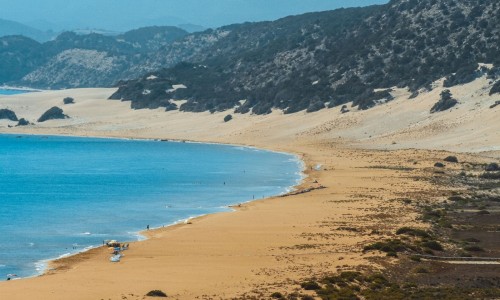
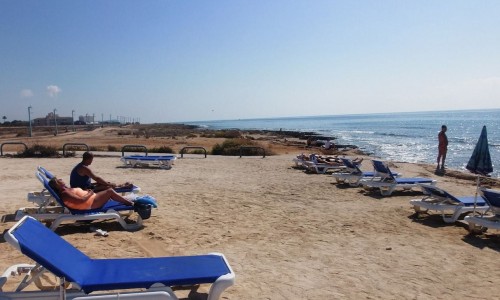
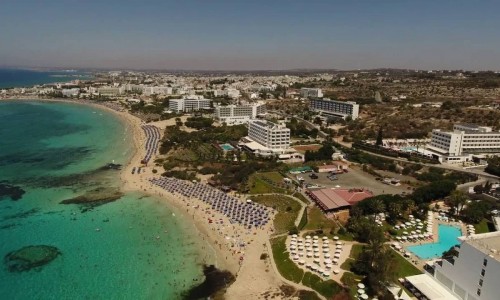
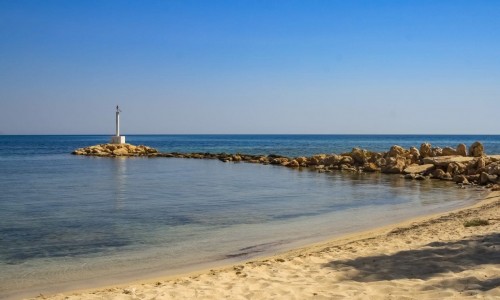
The southern part of the district remains the island's main resort coast. Ayia Napa and Protaras are its two centres, with Fig Tree Bay and Konnos Bay among the best-known beaches; the full list is under beaches in Famagusta, and the villages under Famagusta villages.
This site covers 161 places across the Famagusta district. Here is what is worth your time.
Things to do in Famagusta
The attractions, sites and landmarks of the Famagusta district.
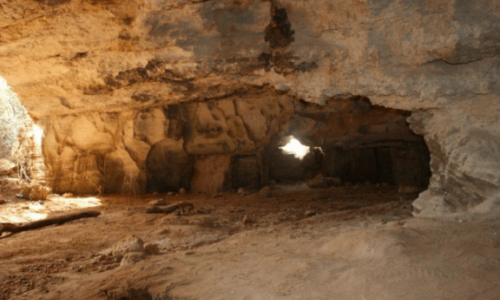
- Agioi Anargyroi Sea Caves
- Ayia Napa Sculpture Park
- Cape Greco National Forest Park
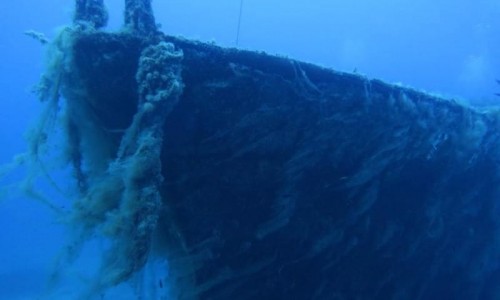
- Green Bay Diving Site
- Ayia Napa Sea Caves
- Ayia Napa Underwater Sculpture Park
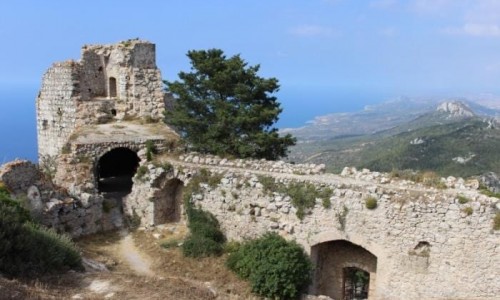
- Kantara Castle
- Achna Dam, Cyprus
- Protaras, Cyprus
- Bridge of Love (Monachus Monachus Arch), Ayia Napa
- Nissia Neolithic Settlement
- Cape Greco Peninsula
Beaches in Famagusta
Every beach along the Famagusta coast, with how to reach it and what to expect.
Villages around Famagusta
The villages of the Famagusta district, inland and coastal.
Churches and monasteries in Famagusta
Byzantine churches, chapels and monasteries across the district.
Museums in Famagusta
Archaeological, folk and specialist museums in and around Famagusta.