1 min read

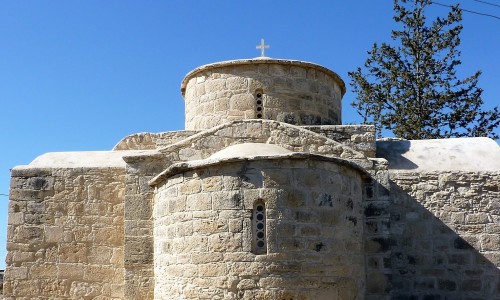
The Prophet Elias Chapel is located in the village of Agridia in the Limassol district and more specifically it is situated on the peak of the Prophet Elias Mountain.

The chapel was built at the end of the 20th century in 1996. The completion of the chapel took place on the 22nd of September in 1996, while its inauguration occurred two years later on the 18th of July 1998.

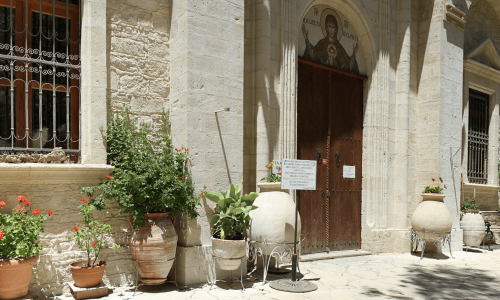
It is a small chapel of byzantine rhythm with murals in its interior and exterior, as well as a paved courtyard. It must be mentioned that the location in which the chapel was built, used to be the area where the villagers celebrated Easter Monday and it has always been a worshipping area. The chapel of Prophet Elias was built with donations given by the villagers.

Prophet Elias Chapel - Agridia Village location map: 

Near Prophet Elias Chapel - Agridia Village

Other places within a short drive, closest first.
Nearby Places and things to do (within 5 km radius)

Limassol

Monastery of Trooditissa

The Holly monastery of Trooditissis or just Trooditissa is a men’s Orthodox monastery in Cyprus which belongs to the Orthodox Church of Cyprus. The Monastery

Limassol

Trooditissa – Xerokolymbos Picnic Site

The Trooditissa Xerkolymbos picnic site is located on the Platres-Prodromos road, 6km from Platres, on the right hand side of the road, before the Trooditissa M

Limassol

Agia Marina Chapel - Fini Village

A little further out from the village of Fini, in-between the plain at the location vines, surrounded by trees and bushes and at a close distance from the river

Limassol

Saint George Chapel - Fini

Outside the village of Fini, towards the north there is a mountain cliff and between the pine trees is the chapel of Saint George. Taking the road towards Tr

Limassol

Agia Anna Chapel - Fini Vilage

Leaving the Fini village and taking the road towards the south there is a mountain cliff where the chapel of Agia Anna is built.

Traditional ‘Shepard Vourka’

The Fini village developed a special and large tradition in the creation of the traditional vourka, whose history is lost during the centuries.

Pages