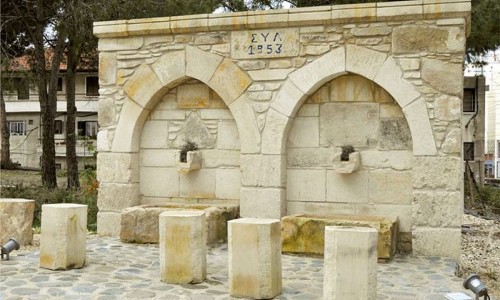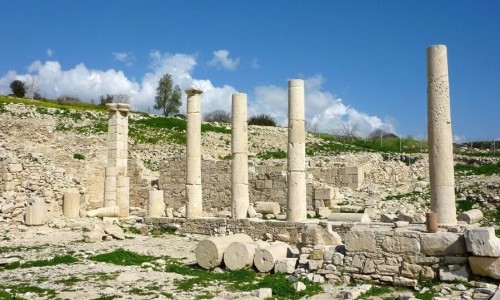


An abandoned village like Foinikas isn’t just a “quiet place.” It’s a place where life used to be visible every day, and now only traces remain. Abandonment doesn’t erase a village; it freezes it mid-sentence. You don’t experience it the way you experience a living community. You experience it like you’re walking through an echo.
The silence that feels physical
The first thing people notice in an abandoned village is not what they see, but what they don’t hear. No footsteps on the lane. No doors opening and closing. No distant conversation. Even the normal sounds of a lived-in place—plates, radios, dogs, mop buckets, a car starting—are absent. The silence becomes part of the architecture.
In Foinikas, that silence gives weight to small details: a broken shutter swinging in wind, a fig tree pushing through a collapsed wall, the faint outline of a path that used to be maintained by habit alone. In active villages, paths stay clear because people use them. In abandoned villages, nature begins to take the land back, slowly and without emotion.
Homes turned into shells
An abandoned house is not just an empty building. It’s a container that has lost its purpose. Roof tiles slip. Wooden beams soften with time. Doors swell and jam. Plaster falls away in patches, revealing stone beneath like bones.
Yet the strange thing is how much “life” still seems present. You can often tell where a kitchen was without seeing a single utensil—by the layout, the chimney, the soot stains, the place where a countertop used to be. You can tell where people gathered, where a table probably stood, where children might have played. Abandoned villages teach you how human life leaves patterns in space.
And those patterns can feel intimate. Not because anything is staged, but because you’re seeing the village without its public face. You’re seeing the structure underneath everyday routine.
Streets that lead nowhere now
The lanes of an abandoned village still perform their original role: they connect homes, yards, storage spaces, and communal points. But now they feel like corridors without destinations.
A bend in a road becomes a reveal — not of a neighbor walking toward you, but of another empty façade. A small square becomes a pause — not because someone is there, but because the square itself still insists: “people used to meet here.”
Sometimes you’ll see stones placed in careful edges along paths. That kind of detail is heartbreaking in its quiet competence. Someone once spent time aligning those stones because it mattered that the village was orderly and cared for.
Nature as the new resident
In abandoned villages, nature doesn’t arrive suddenly. It negotiates. First, weeds fill cracks. Then vines climb. Then shrubs claim corners. Trees seed themselves where they can, and over years their roots begin to shift walls and steps.
This can be beautiful — even cinematic — but it’s also the clearest sign that the village has changed ownership. What once required constant human effort to maintain now belongs to wind, rain, and seed.
The most striking scenes are often where human structure and nature overlap:
- a tree growing inside a room that used to be a bedroom
- grass covering a threshold polished smooth by decades of feet
- a courtyard returning to wild growth, like it’s becoming countryside again
Why villages become abandoned
Abandonment rarely has a single cause. More often, it’s a chain of pressures that breaks the logic of staying:
- work opportunities pulling younger generations toward towns and cities
- the cost of maintaining old houses compared with moving to modern housing
- changes in agriculture and rural income
- schooling, services, and healthcare becoming easier elsewhere
- sometimes political events, land issues, or infrastructure shifts
Over time, the village population drops below a point where community life can sustain itself. When the café closes, when the school is empty, when daily errands require driving far, staying becomes harder — especially for older residents. Then the village becomes “almost empty,” and then one day it becomes “abandoned.”
A place that turns into memory
An abandoned village is not only a physical location. It becomes a memory container — for families, for descendants, for people who heard stories about it, for those who visit and feel something they can’t fully name.
Places like Foinikas can carry a particular kind of sadness, but also a kind of dignity. Even in ruin, you can see the intention that built it: to create a life that was stable, communal, and rooted.
And that’s why abandoned villages are so affecting. They don’t feel like “nothing.” They feel like the outline of something that mattered.
Visiting with respect
If someone visits an abandoned village, the right attitude is simple: treat it like a fragile archive. Don’t remove anything. Don’t damage walls or enter dangerous structures. Don’t treat it like a playground or a backdrop. If it’s accessible and safe, walk slowly, observe, and leave it exactly as you found it.
Because in places like Foinikas, the village may be empty — but it still deserves respect.
Near Foinikas Village
Other places within a short drive, closest first.