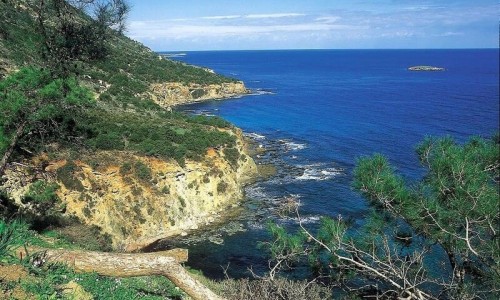


Maa-Palaiokastro is one of the most fascinating archaeological sites in Cyprus, combining ancient history, dramatic coastal scenery, and a strong connection to the island’s distant past. Located on a small peninsula near Coral Bay in the Paphos district, the site offers visitors the opportunity to explore the remains of an ancient settlement while enjoying impressive views of the Mediterranean Sea. Although it is not as large or as widely known as some of Cyprus’s major archaeological attractions, Maa-Palaiokastro has great historical importance and provides valuable information about the people who lived on the island thousands of years ago.
The name “Maa-Palaiokastro” reflects the character of the location. “Palaiokastro” means “old castle” in Greek, although the site is not a medieval castle in the usual sense. Instead, it was a fortified settlement built on a naturally protected peninsula. The sea surrounds the area on several sides, while defensive walls once protected the part of the settlement connected to the mainland. This strategic position made Maa-Palaiokastro an ideal place for people seeking security during a period of political change and instability in the eastern Mediterranean.
The settlement dates mainly to the late Bronze Age, around the end of the thirteenth century and the beginning of the twelfth century BC. This was a time when many important civilizations in the eastern Mediterranean were facing major changes. Cities were destroyed, trade routes were disrupted, and different groups of people moved across the region. Maa-Palaiokastro appears to have been established during this unsettled period, possibly by newcomers arriving in Cyprus from the Aegean world.
Archaeological evidence suggests that the inhabitants of Maa-Palaiokastro may have included people with connections to the Mycenaean Greek world. The buildings, pottery, defensive structures, and other discoveries found at the site show cultural influences from both Cyprus and the Aegean. This mixture is important because it helps historians understand how Cyprus developed during the transition from the Bronze Age to the Iron Age. The site may represent one of the early stages in the gradual spread of Greek language and culture on the island.
The settlement was carefully planned and strongly defended. Large stone walls were constructed across the narrow entrance to the peninsula, helping to protect the community from possible attacks. Inside the settlement were houses, storage areas, workshops, and other buildings used in everyday life. Some structures were built around open courtyards, while others included several rooms connected by narrow passages.
The defensive walls are among the most impressive remains at Maa-Palaiokastro. They demonstrate that the people who lived there were concerned about safety and were prepared to defend their settlement. The location itself also offered natural protection, as steep rocky edges and the surrounding sea made access difficult from several directions. From the highest points of the peninsula, the inhabitants would have been able to observe approaching ships and movements along the coastline.
Daily life at Maa-Palaiokastro was probably based on a combination of farming, fishing, craftsmanship, trade, and food storage. The nearby land could have supported agriculture, while the sea provided fish and other resources. Archaeologists have discovered pottery, tools, household objects, and remains connected with food preparation. These findings help create a picture of a small but organised community living in a carefully protected coastal settlement.
Pottery discovered at the site is especially important. Some ceramic objects show local Cypriot traditions, while others display Mycenaean or Aegean influences. This suggests that the inhabitants had cultural connections with different parts of the Mediterranean. Pottery was used for cooking, storing grain and liquids, serving food, and transporting goods. The different styles and techniques also help archaeologists identify trade contacts and the possible origins of the people who lived there.
Maa-Palaiokastro was occupied for a relatively short period. Evidence indicates that the settlement was destroyed and rebuilt, but it did not continue to exist for many centuries. Its short history makes it even more interesting because it appears to have been created in response to a specific moment of crisis or migration. The settlement may have been a temporary refuge, a new colony, or a defensive centre established by people trying to create a secure life in an uncertain period.
One of the most important aspects of Maa-Palaiokastro is its connection with the wider historical changes taking place in Cyprus and the eastern Mediterranean. Around the time the settlement was founded, several major Bronze Age societies were collapsing. The Mycenaean palace system in Greece declined, cities in Anatolia and the Levant were damaged or abandoned, and traditional trade networks became less stable. Cyprus, located between Europe, Asia, and Africa, was deeply affected by these events.
The island had long been important because of its copper resources and its position along major maritime routes. During the late Bronze Age, Cyprus was connected with Egypt, the Aegean, Anatolia, Syria, and other regions. When these international systems weakened, local communities had to adapt. Maa-Palaiokastro may reflect this period of adaptation, when new populations arrived and older traditions combined with new cultural influences.
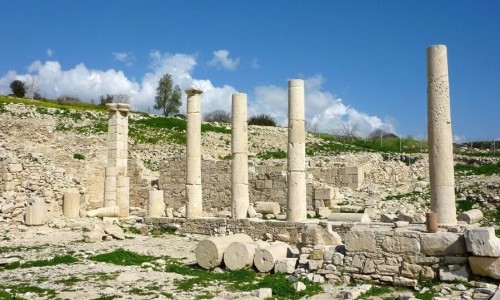
Today, visitors can walk around the archaeological remains and imagine what life may have been like in this coastal settlement more than three thousand years ago. The site is relatively compact, but its location makes it memorable. The blue sea, rocky coastline, and open landscape create a strong sense of connection between the ancient ruins and the natural environment.
A small museum near the site helps explain its history and archaeological importance. The museum presents information about the settlement, the people who lived there, and the discoveries made during excavations. It also helps visitors understand the construction of the defensive walls and the cultural connections between Cyprus and the Aegean world. Models and exhibits make it easier to imagine the original appearance of the settlement.
The surrounding area is also rich in natural beauty. Coral Bay, one of the best-known beaches in the Paphos region, is located nearby. This makes Maa-Palaiokastro an excellent place to combine history with a visit to the coast. The contrast between the peaceful modern landscape and the settlement’s defensive past is particularly striking.
Walking through Maa-Palaiokastro can be a quiet and reflective experience. Unlike larger archaeological sites, it is often possible to explore the area without large crowds. The open sea, strong coastal winds, and remains of ancient walls create a special atmosphere. Visitors can stand near the edge of the peninsula and understand why the location was chosen by people seeking protection and control over the surrounding coastline.
The archaeological site is also important for education. It allows students, researchers, and visitors to learn about migration, cultural exchange, settlement planning, defence, and daily life in the ancient Mediterranean. It demonstrates that Cyprus was not isolated but was part of a much larger network of people, ideas, goods, and traditions.
Maa-Palaiokastro also contributes to the understanding of Cypriot identity. The island’s culture developed through contact with many different civilisations, including people from the Aegean, the Near East, Egypt, and later the Greek and Roman worlds. The settlement represents one stage in this long process of cultural development. Its remains show how communities adapted to change while preserving elements of local tradition.
Although only foundations and sections of walls survive today, the site still communicates a powerful story. It tells of people arriving in a new land, building homes, protecting their families, storing food, creating pottery, and developing a community beside the sea. It also reminds visitors that ancient history was shaped not only by kings and great cities but also by smaller settlements and ordinary people.
Maa-Palaiokastro is therefore much more than a collection of old stones. It is an important link to a period of transformation in Cyprus and the wider Mediterranean. Its defensive architecture, coastal setting, archaeological discoveries, and cultural connections make it a valuable historical landmark.
For travellers interested in archaeology, history, and scenic landscapes, Maa-Palaiokastro is a rewarding destination. It offers a peaceful journey into the ancient past and provides a deeper appreciation of Cyprus’s position at the centre of Mediterranean history. Surrounded by the sea and shaped by centuries of weather, the ruins continue to preserve the memory of a community that once stood at the edge of a changing world.
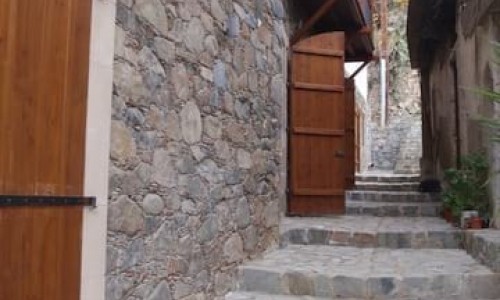
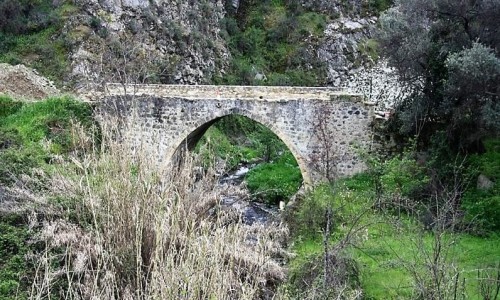
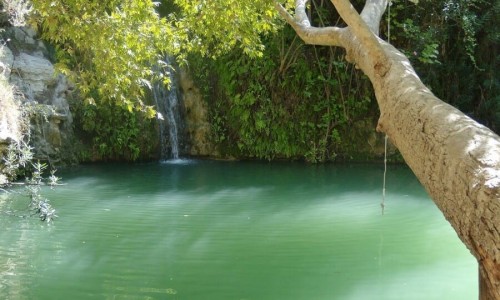
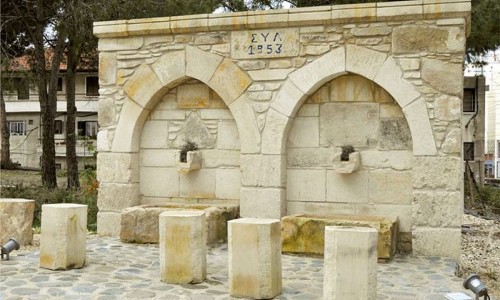
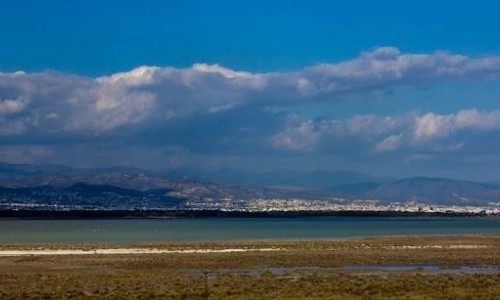
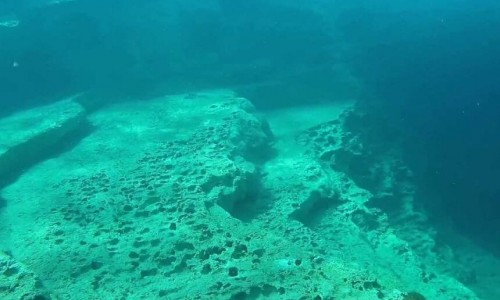
Near Maa Palaiokastro Archaeological Site
Other places within a short drive, closest first.