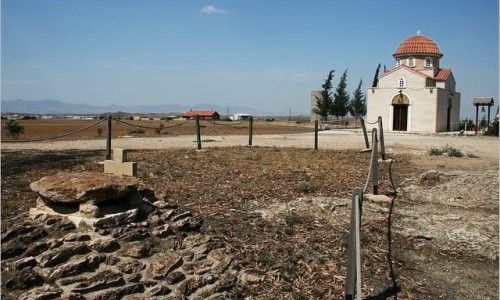
Perched gracefully on a hill overlooking the surrounding countryside, the Chapel of Panagia Tsambika in Pera Chorio Nisou is one of the most charming religious landmarks in the Nicosia district of Cyprus. Situated on a hill known as Gerakarka, near the neighbouring village of Alampra, this picturesque chapel offers visitors a peaceful retreat where spirituality, natural beauty, and local tradition come together. Its elevated position makes it a distinctive landmark, easily visible to motorists travelling along the Nicosia–Larnaca motorway. Although relatively modern compared to many of Cyprus's centuries-old churches and monasteries, Panagia Tsambika holds considerable religious and cultural importance, particularly because of its fascinating connection with the Greek island of Rhodes.
Surrounded by beautiful countryside and expansive views of the Mesaoria plain, the chapel provides a wonderful opportunity for visitors to experience a quieter side of Cyprus. Its serene atmosphere, traditional architecture, and interesting history attract worshippers, photography enthusiasts, and those interested in exploring the island's lesser-known religious destinations. Whether visiting to light a candle, admire the landscape, or simply enjoy a moment of tranquillity, Panagia Tsambika offers an experience that reflects the enduring importance of Orthodox Christianity in Cypriot culture.
The History of Panagia Tsambika
The story of Panagia Tsambika in Pera Chorio Nisou begins with a special relationship between Cyprus and Rhodes. The chapel was constructed in 2002 following the twinning of the Cypriot communities of Pera Chorio and Nisou with Archangelos, a historic settlement on the Greek island of Rhodes. Archangelos is particularly associated with the devotion to Panagia Tsambika, whose renowned monastery has long been an important pilgrimage destination for Orthodox Christians.
The construction of the chapel represented much more than the establishment of another religious building. It symbolised the friendship, shared cultural heritage, and spiritual connections between the Cypriot communities and their counterparts in Rhodes. Through this initiative, the devotion to Panagia Tsambika was given a permanent home in Cyprus, strengthening the relationship between the two islands and preserving a religious tradition that has been passed down through generations.
The chapel was officially consecrated on 24 July 2004 by Metropolitan Kyrillos of Rhodes, who travelled to Cyprus accompanied by three clergymen. The occasion was particularly significant because the original icon of Panagia Tsambika was brought from Rhodes to Cyprus for the ceremony. According to local religious accounts, the icon remained on the island for approximately three days, making the inauguration an extraordinary occasion for the local communities and worshippers who gathered to celebrate.
Today, the chapel continues to represent this historical connection between Cyprus and Rhodes, standing as a reminder of how religious traditions can bring communities together across geographical boundaries.
The Legend of the Miraculous Icon
One of the most fascinating aspects of Panagia Tsambika is the religious legend surrounding its famous icon. The story is deeply rooted in Orthodox tradition and connects the island of Cyprus with Rhodes in an unexpected and mysterious way.
According to tradition, the original icon of the Virgin Mary was once kept at the famous Kykkos Monastery in the Troodos Mountains of Cyprus. However, the icon mysteriously disappeared and was subsequently discovered on Mount Zambyke, near Archangelos in Rhodes. The monks of Kykkos were understandably concerned by its disappearance and reportedly made several attempts to recover the sacred image.
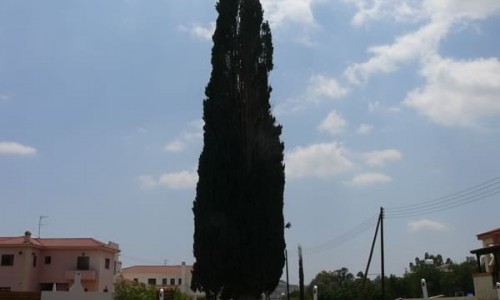
Local tradition describes how a shepherd noticed a mysterious light shining from the mountain on several consecutive nights. Curious about its origin, he eventually climbed towards the illuminated location and discovered the icon of the Virgin Mary concealed within a cypress tree, accompanied by the light of a burning oil lamp.
The discovery was interpreted as a miraculous event, and the location subsequently became associated with the veneration of Panagia Tsambika. According to the legend, attempts to return the icon to Cyprus were unsuccessful, as it repeatedly found its way back to the mountain in Rhodes. The faithful interpreted these events as an indication that the Virgin Mary had chosen the location as her permanent spiritual home.
The story remains an important part of the religious heritage associated with Panagia Tsambika. Although it belongs to the realm of religious tradition rather than documented historical events, it continues to inspire worshippers and provides a meaningful connection between the original monastery in Rhodes and the chapel established in Pera Chorio Nisou.
The Meaning Behind the Name Tsambika
The unusual name Tsambika has attracted considerable interest, particularly because of its association with local traditions and the discovery of the famous icon. There are two commonly mentioned explanations for the origin of the name, both linked to the region of Archangelos in Rhodes.
The first explanation connects the name to the word tsamba, which means spark or flame in the local dialect of Archangelos. According to tradition, when the icon was discovered on the mountain, its actual form could not initially be distinguished from a distance. Instead, observers noticed the flickering light of the oil lamp illuminating its location. This mysterious light subsequently became associated with the name Tsambika, symbolising the spiritual illumination of the Virgin Mary.
Another explanation links the name to the ancient Greek word sambyke, referring to a type of vessel or ship. According to this interpretation, the mountain in Rhodes was believed to resemble the shape of such a vessel, giving rise to the geographical name Zambyke, from which Tsambika eventually developed.
Regardless of its precise linguistic origins, the name has become closely associated with devotion to the Virgin Mary and remains particularly significant in Rhodes and Cyprus.
Architecture and Natural Surroundings
The Chapel of Panagia Tsambika is an attractive example of modern Orthodox religious architecture, combining traditional Byzantine influences with a simple and harmonious design. Its distinctive dome, tiled roofing, pale exterior walls, and carefully proportioned structure complement the surrounding landscape, creating a beautiful visual contrast against the countryside and open sky.
Unlike the large and elaborately decorated churches found in Cyprus's major towns, this chapel possesses a more intimate character. Its modest dimensions contribute to the peaceful atmosphere, offering visitors an opportunity for quiet prayer and reflection away from the distractions of everyday life.
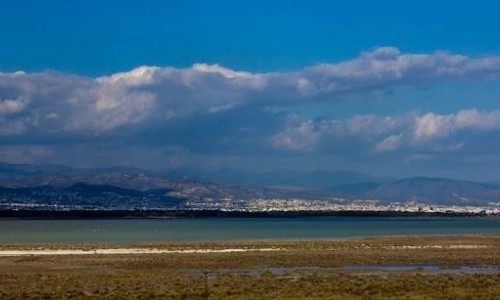
Its location on Gerakarka hill is among its most appealing features. Standing at an elevation of approximately 327 metres, the chapel overlooks a broad landscape of fields, rural settlements, and distant hills. From its elevated position, visitors can appreciate the agricultural character of the surrounding area and enjoy panoramic views that change throughout the seasons.
During spring, the countryside becomes particularly attractive as seasonal greenery and wildflowers transform the landscape. In summer, golden fields and clear blue skies create a distinctly Mediterranean setting, while autumn brings softer colours and pleasant conditions for exploring the area. The chapel is especially picturesque towards sunset, when the warm evening light illuminates its exterior and the surrounding hills.
The combination of religious architecture and natural scenery makes Panagia Tsambika an appealing destination for visitors interested in photography, rural landscapes, and the peaceful atmosphere of Cyprus's countryside.
A Place of Prayer, Hope and Family Traditions
Panagia Tsambika holds particular significance among Orthodox Christians because of the traditional belief that the Virgin Mary offers spiritual support to couples experiencing difficulties having children. This association is especially prominent in Rhodes, where the original monastery has attracted generations of worshippers seeking comfort, hope, and blessings for their families.
According to religious tradition, many couples pray to Panagia Tsambika and make personal vows in connection with their desire to become parents. Some families subsequently choose the names Tsambikos or Tsambika for their children as an expression of gratitude and devotion.
This religious tradition is also associated with the chapel in Pera Chorio Nisou, where visitors come to light candles, offer prayers, and seek spiritual comfort. The chapel has become a meaningful setting for baptisms, with families choosing its peaceful surroundings to celebrate important moments in their children's lives.
Beyond its association with parenthood, Panagia Tsambika welcomes people seeking reassurance, reflection, or a deeper connection with their faith. Its quiet hilltop setting enhances its character as a place of contemplation, while its history demonstrates the importance of religious devotion in maintaining cultural and community ties.
Religious Celebrations and Traditions
The devotion to Panagia Tsambika is particularly associated with the celebration of the Nativity of the Virgin Mary on 8 September, an important feast in the Orthodox Christian calendar. The religious tradition is also linked to the Third Sunday of Great Lent, known as the Sunday of the Veneration of the Holy Cross.
These celebrations reflect the broader Orthodox traditions shared by Cyprus and Greece, demonstrating the enduring spiritual connection between the two countries.
For visitors interested in experiencing Cyprus's religious heritage, the chapel provides an opportunity to appreciate the importance of smaller places of worship alongside the island's larger monasteries and historic churches. Such locations often hold considerable meaning for their surrounding communities, preserving customs, personal memories, and traditions that form an important part of local cultural identity.
Visiting Panagia Tsambika
Located southwest of Pera Chorio Nisou, close to Alampra in the Nicosia district, Panagia Tsambika is an appealing destination for those exploring the central part of Cyprus. Its position near the Nicosia–Larnaca motorway makes it a convenient stop for motorists travelling between the two cities, while its elevated setting provides a welcome contrast to the busier urban surroundings.
The chapel can be reached by following the local roads leading towards Gerakarka hill. As visitors approach the location, the building gradually becomes more prominent against the surrounding landscape, offering a picturesque introduction to this peaceful religious site.
A visit can easily be combined with an exploration of Pera Chorio and Nisou, two neighbouring communities with an interesting collection of churches, traditional buildings, and local landmarks. Among the area's other religious attractions are the historic Church of Saints Peter and Paul, the Church of Agia Marina, and several smaller chapels that reflect the region's long-standing Orthodox heritage.
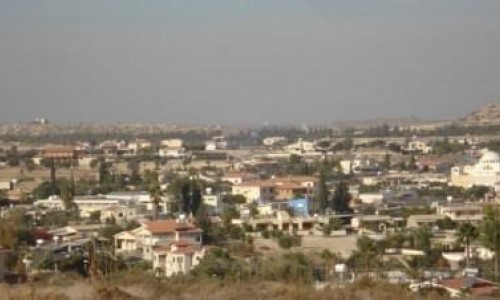
Visitors may also enjoy discovering the nearby village of Alampra and the agricultural countryside of the Mesaoria plain. The surrounding area offers an authentic glimpse into life outside Cyprus's major tourist centres, making it particularly appealing to those who appreciate traditional villages and quieter destinations.
For photography enthusiasts, late afternoon is an especially attractive time to visit, as the softer sunlight creates beautiful conditions for capturing the chapel and its scenic surroundings. The elevated location also provides an excellent opportunity to admire the sunset and enjoy the tranquillity of the countryside.
A Special Connection Between Cyprus and Rhodes
What makes Panagia Tsambika particularly distinctive is the relationship it represents between two Mediterranean islands with shared religious and cultural traditions. Its establishment following the twinning of Pera Chorio and Nisou with Archangelos demonstrates how community relationships can develop into lasting cultural landmarks.
The original monastery of Panagia Tsambika in Rhodes is renowned for its dramatic hilltop location and longstanding religious significance. Through the construction of the chapel in Cyprus, elements of this tradition were introduced to a new setting, allowing Cypriot worshippers to develop their own relationship with the devotion to Panagia Tsambika.
The historical connection is made even more meaningful by the legend that associates the original icon with Kykkos Monastery. Whether approached from a religious, historical, or cultural perspective, the chapel represents an interesting relationship between the traditions of Cyprus and Rhodes, bringing together elements of faith, folklore, and community identity.
Although built in the early twenty-first century, Panagia Tsambika demonstrates that the religious heritage of Cyprus continues to evolve. New places of worship can acquire considerable significance through the traditions they preserve, the relationships they represent, and the personal experiences of those who visit them.
A Peaceful Religious Landmark Worth Discovering
Panagia Tsambika in Pera Chorio Nisou is a beautiful example of how spirituality, history, and nature can come together in a single destination. Its picturesque position on Gerakarka hill, its fascinating connection with Rhodes, and its association with one of the most beloved traditions surrounding the Virgin Mary make it a distinctive addition to the religious landscape of Cyprus.
For visitors exploring the Nicosia district, the chapel offers an opportunity to discover a destination that is both accessible and wonderfully peaceful. Its panoramic countryside views, traditional appearance, and quiet surroundings provide an ideal environment for appreciating the island's natural beauty while learning about the religious customs that remain deeply embedded in Cypriot culture.
Whether visited for personal prayer, cultural interest, photography, or simply to enjoy its remarkable setting, Panagia Tsambika leaves a lasting impression through its simplicity and tranquillity. Standing proudly above the surrounding countryside, this charming chapel remains a meaningful symbol of faith, hope, and the enduring connection between Cyprus and Rhodes.
Near Panagia Tsambika Chapel - Pera Chorio Nisou
Other places within a short drive, closest first.