Drapia Village is one of the lesser-known and more atmospheric abandoned settlements of Cyprus, hidden within the peaceful countryside of the Larnaca District and surrounded by the rugged landscapes of the wider Vasilikos Valley. Unlike the island’s famous coastal resorts, busy towns and popular mountain villages, Drapia offers a completely different experience, one that is shaped by silence, history and the traces of a community that once lived and worked in this remote part of the island. The settlement is no longer inhabited in the traditional sense, yet its stone ruins, old pathways, religious landmarks and surrounding hills preserve a strong connection with the past. For visitors who enjoy discovering forgotten places and learning about the quieter chapters of Cypriot history, Drapia provides a fascinating glimpse into a way of life that has almost entirely disappeared. Its location played an important role in its development, as the village lies within an area known for its agricultural traditions, mineral wealth and close relationship with nearby settlements such as Kalavasos, Ora and other communities of the Vasilikos region. The surrounding landscape is characterised by low hills, valleys, seasonal streams and dry Mediterranean vegetation, creating a setting that feels isolated today but was once deeply connected to the daily life of local people. In the past, such landscapes were working environments rather than remote countryside, with families cultivating the land, raising animals, travelling between neighbouring villages and making careful use of the natural resources available around them.
Historical references suggest that Drapia has existed for several centuries, and its origins are connected with the long history of settlement in inland Cyprus. The island has repeatedly seen villages grow, decline and sometimes disappear completely as economic, social and environmental conditions changed, and Drapia represents one such example. Over time, the settlement developed as a small rural community whose residents depended mainly on farming, livestock and later employment associated with the mining industry of the Kalavasos area. Daily life would have followed a rhythm shaped by the seasons and by the practical demands of village living. Residents would have worked from early morning, tended to fields and animals, repaired homes, prepared food and maintained strong family and community ties. Life would have been physically demanding, yet it would also have been defined by cooperation, shared customs and a close relationship with the surrounding landscape. As in many Cypriot villages, traditions were passed down from one generation to the next, while religious celebrations, family gatherings and seasonal agricultural work helped create a strong sense of local identity.
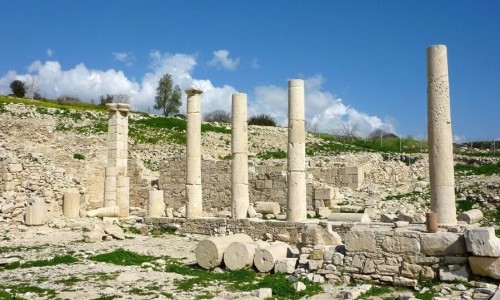
The traditional architecture of Drapia is among the most evocative aspects of the settlement and offers valuable insight into the practical knowledge of rural Cypriot communities. Many of the surviving ruins are built from local stone and reflect construction methods that were developed to suit both the climate and the needs of everyday life. Thick walls provided insulation from the summer heat while also helping interiors remain warmer during the colder winter months, and homes often included shaded courtyards, small windows and separate spaces for storage, animals or work. Some houses may have been two storeys high, while others were more modest, but all were closely integrated into the compact layout of the village. Narrow paths connected one home to another, and families lived in close proximity, making interaction with neighbours a constant part of everyday life. Children would have played in the lanes, adults would have exchanged news and helped one another with work, and courtyards would have served as important spaces for cooking, cleaning, socialising and household tasks. Although many buildings have now deteriorated, the remaining walls, doorways and foundations still allow visitors to imagine how the old village once looked and how closely domestic life was connected with work and community.
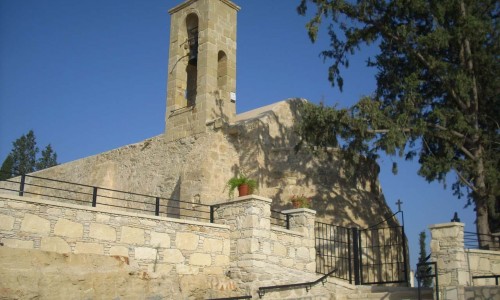
One of the most significant landmarks associated with Drapia is the small chapel dedicated to Saint George, which stands as a reminder of the important role that religion played in traditional village life. Even the smallest settlements in Cyprus usually had a church or chapel that served not only as a place of worship but also as a social centre for the community. The simple stone construction and modest scale of the chapel reflect the character of Drapia itself, while its presence continues to connect the abandoned settlement with its former residents and traditions. Religious calendars shaped much of rural life, with fasting periods, feast days, processions and celebrations giving structure to the year. Families prepared special foods, attended services and gathered with relatives and neighbours, strengthening both faith and community identity. Saints associated with local churches were often regarded as protectors of the village, and annual religious festivals provided opportunities for nearby communities to meet, trade and socialise. Even after a settlement became depopulated, churches and chapels often remained powerful symbols of continuity, with former residents and their descendants returning for special services or commemorations.
Drapia’s later history became closely connected with the growth of mining in the Kalavasos region, an industry that transformed the economy of the wider area and created new employment opportunities for communities that had previously depended almost entirely on agriculture. Cyprus has a long history of mineral extraction, particularly copper mining, and the Vasilikos Valley became an important centre of activity during the modern industrial period. For residents of Drapia and nearby settlements, mining offered a new source of income and created different patterns of work and movement. Men would often travel daily to mining areas while families continued to maintain fields, animals and household responsibilities at home. The expansion of mining also brought infrastructure, including roads, transport routes and railway systems used to move workers, equipment and extracted materials. The wider Kalavasos region still preserves traces of this industrial heritage, offering a striking contrast with the peaceful countryside seen today. At the height of activity, the surrounding area would have been far busier, with machinery, transport and workers forming part of the everyday landscape.
As the mining industry eventually declined, smaller settlements that depended heavily on it began to face increasing challenges. Employment opportunities disappeared, younger residents sought work elsewhere and larger towns became more attractive because they offered improved access to education, healthcare and modern services. This gradual movement away from rural areas affected many villages across Cyprus during the twentieth century, and Drapia was one of the communities that slowly lost its population. The abandonment of the settlement was likely not the result of a single dramatic event but rather a gradual process in which families left one after another, homes were closed and agricultural activity decreased. As buildings were left without maintenance, roofs collapsed, walls weakened and vegetation began to reclaim courtyards and pathways. Over time, the village took on the quiet and haunting appearance it has today, with ruins blending naturally into the surrounding hills and giving the impression of a place where time has simply stopped.
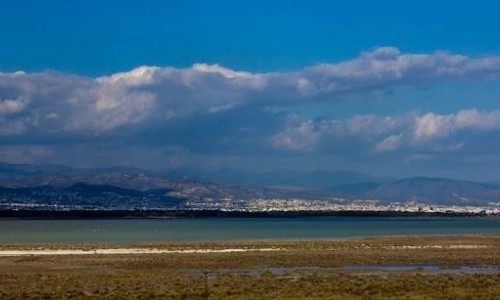
The countryside around Drapia contributes greatly to the atmosphere of the settlement and changes dramatically with the seasons. During winter and early spring, rainfall transforms the hills, bringing fresh greenery and wildflowers that soften the rugged landscape and create a striking contrast with the old stone buildings. In late spring and summer, the scenery becomes much drier, with golden grasses, exposed earth and warm tones dominating the hillsides. Olive trees, low shrubs and hardy Mediterranean plants are common throughout the area, giving the region a distinctly Cypriot character. The quietness of the surrounding countryside makes Drapia especially appealing to visitors who enjoy photography, walking and exploring places away from the usual tourist routes. The remains of old houses provide interesting subjects for photographs, while changing light throughout the day creates strong shadows and highlights the texture of the stone. Morning and evening can be particularly atmospheric, when softer light brings out the colours and shapes of the ruins.
One of the features that makes Drapia especially interesting is the absence of large-scale tourism development. There are no major visitor centres, souvenir shops or organised attractions, and this helps preserve the authenticity of the place. The experience is focused almost entirely on the landscape, the ruins and the history that can be read through the remaining architecture. Visitors are encouraged to move slowly and notice small details such as a weathered doorway, a partially collapsed courtyard, a narrow path or the remains of a storage room. These details can reveal much about how the village once functioned and remind visitors that history is often found in ordinary places rather than only in grand monuments. Drapia feels less like a formal historical site and more like a fragment of everyday rural life that has been left within the landscape.
The village is also closely connected with the wider historical identity of the Vasilikos Valley, a region that has long served as a natural corridor between inland settlements and the southern coast. Villages developed where access to water, fertile land and nearby routes made permanent settlement possible, and the area later gained further importance through mining and transport. Drapia existed within this changing environment, alongside communities such as Kalavasos and Parsata, each of which followed a different path. Kalavasos remained an active settlement and continues to preserve much of its traditional character, while Drapia became abandoned and Parsata experienced a similar decline. Exploring these places together can help visitors understand how neighbouring communities with shared landscapes and histories could develop in very different ways depending on economic opportunities and changing social conditions.
Traditional village life in places such as Drapia depended heavily on practical skills and self-sufficiency. Families often produced much of what they needed themselves, cultivating vegetables, grains, olives and fruit while keeping animals for milk, meat and transport. Bread, cheese, preserved vegetables and other foods were commonly prepared at home, and agricultural work followed the rhythms of the seasons. Water was an especially valuable resource, and before modern supply systems became widespread, communities relied on wells, springs, cisterns and seasonal water sources. A dry year could create serious difficulties, while good rainfall could determine the success of crops. Animals such as goats, sheep, donkeys and mules were essential to daily life, providing food, income and transport. Donkeys and mules in particular allowed residents to move through narrow rural tracks and carry goods between fields, neighbouring settlements and markets.
Social relationships were equally important, especially in small and isolated communities. Villagers maintained close connections with neighbouring settlements through family ties, marriages, religious festivals, markets and seasonal work. People travelled to nearby villages to buy supplies, visit relatives or attend celebrations, meaning that Drapia was never completely cut off from the wider region. Over time, however, improved roads and motor transport changed this pattern of life. While better transport made movement easier, it also allowed residents to commute further or relocate altogether, contributing to the gradual depopulation of small settlements. Access to electricity, running water, schools, healthcare and modern services became increasingly important, and larger villages and towns were better equipped to provide them. For younger generations especially, leaving small rural communities often offered greater opportunities for education and employment.
Today, Drapia serves as a physical record of these wider historical changes. Its ruins preserve evidence not only of individual homes but also of the social and economic transformations that affected Cyprus during the twentieth century. The empty houses and overgrown pathways encourage visitors to think about how quickly a once-living community can disappear and how deeply migration and modernisation can reshape the countryside. For former residents and their descendants, however, the village may carry memories that go far beyond what a casual visitor can see. A ruined house may still be remembered as a family home, a narrow lane as a place where children played, and the chapel as the centre of an annual celebration. In this sense, Drapia remains part of a living cultural memory even though it no longer functions as a conventional village.
For photographers and travellers interested in abandoned places, Drapia offers a particularly strong visual and emotional atmosphere. Weathered stone walls, broken roofs, empty windows and vegetation growing through former homes create powerful images, while different weather conditions can completely change the mood of the settlement. Bright sunshine brings out the warm colours of the stone and countryside, while cloudy skies can give the village a more mysterious and reflective appearance. Spring is one of the most attractive seasons for visiting because the surrounding landscape is greener and temperatures are comfortable, while autumn can also be pleasant once the first rains begin to soften the dry summer scenery. Summer reveals the harsher side of the landscape, with intense heat, limited shade and dry hills, conditions that also help visitors appreciate the challenges faced by earlier residents.
Anyone exploring Drapia should also remember that abandoned buildings can be unstable. Loose stones, collapsed roofs, uneven ground and hidden holes may make some structures unsafe to enter. The village is best appreciated carefully and respectfully, with visitors observing damaged buildings from safe areas rather than climbing through ruins. Respect for the site is particularly important because abandoned villages are not simply empty spaces but part of the cultural heritage of Cyprus. They may still have strong emotional importance for families whose ancestors lived there, and architectural fragments or objects found within the settlement should always remain where they belong.
Drapia provides a rewarding experience for travellers who wish to see a side of Cyprus that is very different from the island’s beaches and well-known archaeological attractions. It offers no grand monuments and no organised entertainment, yet this simplicity is precisely what gives the village its character. The settlement encourages visitors to slow down, look carefully and use their imagination. A stone doorway, a ruined courtyard or a narrow village path can become a window into the everyday lives of people who once worked, raised families and celebrated important occasions here. These quiet traces of ordinary life can often feel more personal than larger historical sites because they allow visitors to connect directly with the human scale of the past.
Drapia also highlights the importance of preserving the lesser-known parts of Cyprus’s heritage. As development continues across the island, abandoned and semi-abandoned villages become increasingly valuable as records of traditional architecture, agricultural life and community organisation. Their preservation does not necessarily require turning them into major tourist attractions. In many cases, careful conservation, documentation and responsible visitation can help protect their character while allowing future generations to understand their significance. The authenticity of Drapia is closely linked to its quietness, and any future attention given to the settlement would ideally respect that atmosphere rather than transforming it into an overly commercial destination.
Ultimately, Drapia Village is a place where history, landscape and memory come together. Its story reflects the rise and decline of rural communities, the impact of mining, the movement of people toward larger towns and the wider modernisation of Cyprus. Yet despite its abandonment, the village has not lost its identity. The remaining stone houses, the chapel, the paths and the surrounding hills continue to preserve fragments of the lives that once filled this landscape. For anyone interested in traditional architecture, rural history, photography or hidden places, Drapia offers a memorable and deeply atmospheric experience.
Drapia may be small and largely forgotten, but its significance lies precisely in its simplicity. It reminds visitors that history is not only found in castles, monasteries and major archaeological sites but also in ordinary homes, fields, pathways and village churches. The settlement offers a rare opportunity to see how a small rural community once fitted naturally into the landscape and how dramatically life in Cyprus has changed within a relatively short period of time. For travellers willing to explore beyond the familiar tourist routes, Drapia reveals a quieter, more reflective side of the island, one where the past remains visible in every weathered wall and silent path.
Near Drapia Village
Other places within a short drive, closest first.