

Gerovasa–Trozena is one of those places in Cyprus where silence speaks louder than words. Hidden among the hills of the Limassol district, close to the border with Paphos, it is not a busy tourist village, nor a restored mountain resort filled with cafés and souvenir shops. Instead, it is a quiet, atmospheric, almost mysterious place, where abandoned stone houses, narrow rural paths, old religious buildings, and the surrounding landscape tell the story of a community that once lived, worked, celebrated, and struggled there.
The area is often referred to as Gerovasa–Trozena, although historically it was connected with two nearby settlements: Gerovasa and Trozena. Today, both are mostly known as abandoned villages, but they remain important because they represent a different side of Cyprus — not the beaches, hotels, and modern towns, but the older rural world that shaped much of the island’s identity.
A Village Between Districts and Valleys
Gerovasa–Trozena lies in a beautiful and relatively remote part of Cyprus, surrounded by hills, dry riverbeds, wild vegetation, and old agricultural land. The area is linked with the Diarizos Valley, a region known for its peaceful scenery and traditional rural character. Trozena is often described as being located near the border area between the Limassol and Paphos districts, giving it a sense of being between two worlds — not fully coastal, not fully mountainous, but somewhere in between.
This location helped shape the life of the village. In the past, people living here would have depended heavily on the land. Agriculture, animals, seasonal work, and small-scale village life would have formed the rhythm of everyday existence. Life would not have been easy. The landscape is beautiful, but it is also demanding. The summers are hot and dry, and the village’s distance from larger centres would have made transport, trade, education, and employment more difficult than in bigger towns.
Yet this same remoteness is part of what gives Gerovasa–Trozena its charm today. The absence of modern noise allows visitors to feel the character of the place more deeply. Walking through the area, one can imagine the sounds that once filled the village: voices from stone houses, animals moving through the paths, bells from the chapel, children playing, and families working together in fields and courtyards.
The Character of the Abandoned Village
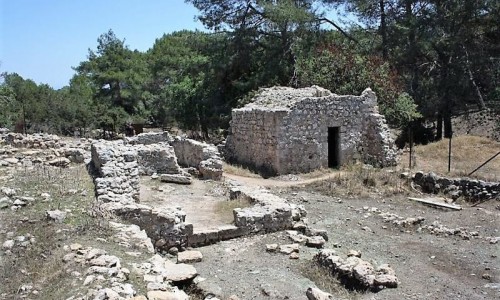
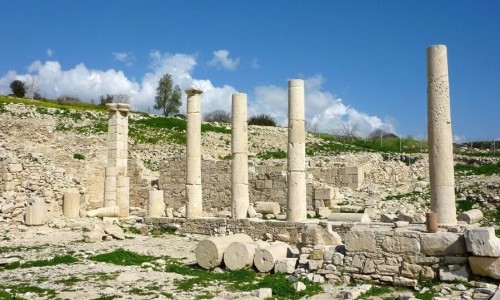
What makes Gerovasa–Trozena especially interesting is its abandoned atmosphere. Unlike villages that have been restored or transformed into tourist destinations, this area still carries the feeling of a place left behind by time. Ruined stone walls, empty homes, old paths, and surviving religious buildings create a powerful sense of memory.
The houses, although damaged by age and weather, still reveal elements of traditional Cypriot rural architecture. Stone was the main material, chosen because it was available locally and suited to the landscape. The buildings were practical rather than decorative, designed for families who lived close to the land. Thick walls helped protect against heat in summer and cold in winter. Small windows, simple rooms, courtyards, and storage spaces reflected a way of life that was modest, functional, and deeply connected to agricultural work.
In abandoned villages like this, the ruins are not just empty stones. They are traces of ordinary human lives. Every doorway once led into a home. Every courtyard once had a purpose. Every path connected neighbours, relatives, fields, churches, and daily responsibilities. The silence today makes the visitor more aware of how alive the place must once have been.
Gerovasa and Trozena: Two Communities, One Landscape
Although today the names are often joined together, Gerovasa and Trozena had their own identities. Gerovasa was historically associated with a Turkish Cypriot population, while Trozena was more closely associated with a Greek Cypriot rural community. This makes the area especially meaningful in the wider history of Cyprus, because it reflects the island’s complex social and cultural past.
Before abandonment, the two communities existed within the same landscape. Like many villages in Cyprus, daily life would have been shaped less by politics and more by practical needs: farming, water, animals, family, religion, and survival. People in neighbouring villages often depended on one another, traded with one another, and shared the same roads, valleys, and seasonal difficulties.
However, the difficult events of the 20th century affected many rural communities across Cyprus. Intercommunal tensions, economic hardship, migration to towns, and the search for better opportunities gradually emptied many villages. Gerovasa and Trozena were among those places that lost their permanent population. Their abandonment was not the result of one simple cause, but of wider social, political, and economic changes that reshaped the island.
The Church of Agios Georgios
One of the most important landmarks in the area is the Church of Agios Georgios, located between the abandoned villages. In many abandoned villages, the church often remains the strongest symbol of continuity. Even when houses collapse and families leave, the church may still be maintained, visited, or remembered by descendants and locals.
The church gives the landscape a spiritual centre. Its presence reminds visitors that Gerovasa–Trozena was not only a place of work and survival, but also a place of faith, celebration, weddings, baptisms, funerals, feast days, and community gatherings. In traditional Cypriot village life, the church was not separate from the community; it was one of the main points around which social life was organised.
Standing near the church, one can better understand the emotional depth of the place. The surrounding ruins show abandonment, but the church suggests memory, respect, and continuation. It is a reminder that even if a village no longer has permanent residents, it may still remain alive in cultural memory.
The Trozena Bridge
Another notable feature of the area is the old bridge associated with Trozena and Gerovasa. Bridges in rural Cyprus were essential structures, especially in areas divided by streams, valleys, or seasonal rivers. They connected communities, fields, and roads, making movement possible during different times of the year.
The bridge near Trozena adds to the historical character of the village. It is not only a practical structure but also a symbol. It connects two sides of the landscape, just as the history of Gerovasa–Trozena connects different communities, periods, and memories. For visitors, it is one of the most distinctive points of interest in the area and adds to the feeling that the village belongs to an older Cyprus, before modern roads and urban development changed the rhythm of rural life.
Nature and Scenery
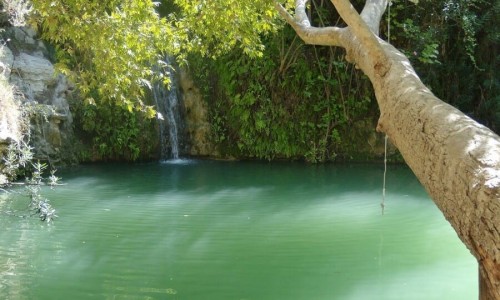
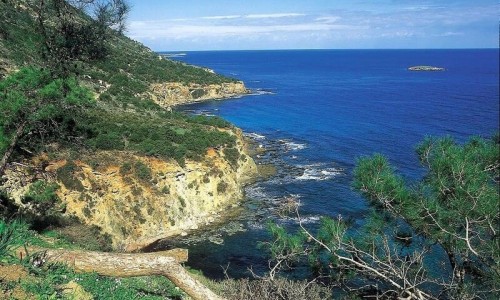
The natural setting of Gerovasa–Trozena is one of its greatest attractions. The surrounding hills, valleys, olive trees, shrubs, and wild plants create a peaceful Mediterranean environment. Depending on the season, the area can feel very different. In spring, the countryside may appear greener and softer, with wildflowers and fresh growth. In summer, the land becomes dry, golden, and quiet under the strong Cypriot sun. In autumn and winter, the atmosphere can be cooler and more reflective, especially after rain.
This seasonal character is important because it reflects the traditional life of the village. In the past, people would have lived according to the seasons. Agricultural work, harvesting, animal care, religious celebrations, and family routines were all connected to the natural calendar. Today, visitors may simply see a scenic abandoned village, but the landscape itself was once the foundation of the community’s survival.
The area is also attractive for walkers, photographers, and people who enjoy exploring less commercial parts of Cyprus. It is the kind of place that rewards slow observation. A quick visit may show only ruins, but a slower walk reveals textures, details, and atmosphere: old stonework, views across the valley, the contrast between human abandonment and natural beauty, and the quiet dignity of the village.
A Place of Memory
Gerovasa–Trozena is not just an abandoned village; it is a place of memory. Cyprus has many such villages, each with its own story. Some were abandoned because of conflict. Others declined because people moved to towns or emigrated abroad. Some were left behind because modern life made rural survival too difficult. Together, these villages form an important part of the island’s hidden history.
They remind us that Cyprus was once far more rural than it is today. Before tourism, highways, universities, modern hotels, and business centres, much of the island’s life was organised around small communities. These communities had their own traditions, dialects, family networks, religious customs, and agricultural routines. When they disappeared, Cyprus did not only lose buildings; it lost entire ways of life.
Gerovasa–Trozena captures this feeling strongly. Its ruins invite reflection. They make visitors think about migration, memory, identity, and the passage of time. They also raise questions about preservation. Should abandoned villages be restored? Should they remain untouched? Can development bring new life without destroying authenticity? These are important questions, especially as more people become interested in rural heritage and alternative tourism.
The Possibility of Revival
In recent years, abandoned villages in Cyprus have attracted renewed attention. Some have been restored into agrotourism destinations, while others remain untouched. Gerovasa–Trozena has also been discussed in relation to revival and redevelopment plans, showing that the village may not remain forgotten forever.
A sensitive revival could bring benefits. It could protect surviving buildings, encourage visitors to explore the rural interior of Cyprus, support local communities, and preserve cultural heritage. However, any development would need to respect the identity of the place. The value of Gerovasa–Trozena lies in its authenticity. If restored too aggressively, it could lose the very atmosphere that makes it special.
The challenge is to find balance. A village like this should not be treated only as land for investment, but as a cultural landscape. Its ruins, church, bridge, paths, and natural surroundings all form part of its story. Any future use should recognise that the village belongs not only to the present but also to the people who lived there before.
Visiting Gerovasa–Trozena
For visitors, Gerovasa–Trozena is best approached with respect and curiosity. It is not a polished tourist attraction, so people should not expect organised facilities, shops, or guided infrastructure. Instead, the experience is more personal and atmospheric. It is a place for walking, observing, photographing, and imagining.
Good footwear is useful, especially if exploring uneven paths or ruins. Visitors should be careful around abandoned buildings, as old structures can be unstable. It is also important not to damage walls, remove objects, leave rubbish, or disturb the area. Abandoned villages may seem empty, but they are still part of Cyprus’s heritage.
The best time to visit is often during the cooler months or in spring, when the surrounding countryside is more comfortable for walking. Early morning or late afternoon can also be ideal for photography, as the softer light brings out the colour and texture of the stone buildings and the surrounding hills.
Why Gerovasa–Trozena Matters
Gerovasa–Trozena matters because it shows a side of Cyprus that is quiet, fragile, and deeply human. It is not famous in the same way as coastal resorts or major archaeological sites, but its importance lies in its honesty. It tells the story of ordinary village life, of communities shaped by land and history, and of the many rural places that were gradually emptied by the pressures of modern life.
The village also reminds us that heritage is not always grand. Sometimes it is found in a broken wall, a silent chapel, an old bridge, or a path that no longer leads to an occupied home. These places help us understand Cyprus more fully. They show that the island’s identity is built not only from beaches, castles, monasteries, and cities, but also from forgotten villages like Gerovasa–Trozena.
Today, the village stands between abandonment and possible renewal. Whether it remains a quiet ruin or one day becomes part of a carefully restored rural destination, its story deserves to be remembered. Gerovasa–Trozena is a place where history, landscape, and memory meet — a village that may no longer be full of people, but still has a powerful presence.
Near Gerovasa - Trozena Village
Other places within a short drive, closest first.