
Pera Pedi Village is located south of the Troodos Mountain Range , about 35 kilometres northwest of Limassol at an altitude of 770 metres. It is built on a wide straightening, surrounded by mountains with a height between 850 and 1000 metres. The village is crossed by the Krios River, a tributary of the Kouris River.
Pera Pedi has an annual rainfall of about 800mm, with vineyards, apple trees, pear trees and others being cultivated. It is one of the first villages, which cultivated apple trees, and it became known as an apple-producing village.
The village met many population increases and decreases during its long history. In 1881, the residents were 182 and increased to 249 in 1901, while in 1921 they increased to 347 and to 422 in 1946. Later on the village, as many other villages in the area were hit due to urbanism resulting in the decrease of 281 residents in 1960, to 217 in 1973 and to 130 in 1982. Today the population numbers are very reassuring, due to the improvement of the road network and the provision of many incentives, which resulted in the construction of 250 houses, creating continuous development and progress.
The name of the village is because it is built on a straightening even though it is located in a mountainous area. The name Pedion – Pedi shows the antiquity of the area which must be placed during the Byzantine era. It is considered that the settlement existed even before the Frankish period. It is thought that Esienne de Lusignan (16th century) knew of the existence of the village and mentions it as the origin of Agia Mavri and her husband Timotheou.
One of the most impressive structures in the village is undoubtably the wine factory, which was originally built by the British on a manufactured straightening in the area of Pyrkovounou. It was made by limestone from the opposite hill. Today the factory is owned by KEO and takes in about three million kilos of black grapes from the surrounding area.
Another impressive contruction in the village is the traditional Watermill, which operated until the 1940’s and which has been declared as an ancient monument. Today it is owned by the Community Board of Pera Pedi and has been restored.
The village has a historic church of Agiou Nikolaou, which was built in 1796. Two mobile icons are kept in this church, one of the Virgin Mary dated to the 16th century, and one of Agiou Ioanni the Evangelist that is dated to 1550. A wooden box is also maintained which has the remains of the saints Agiou Spyridona, Agiou Neophytou and Agiou Phillipou.
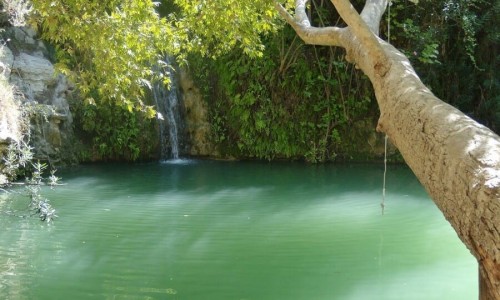
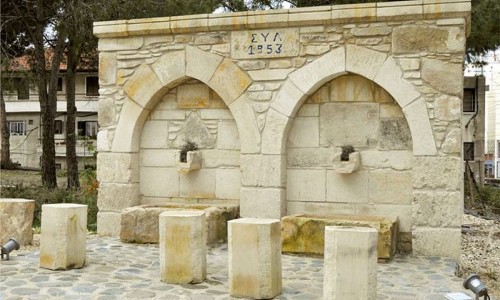
Pera Pedi is one of the most beautiful villages in Cyprus, literally filled with greenery. It maintains the traditional mountain architecture to a large extent. Visitors can enjoy the coolness of the village in the main square. The idyllic environment is always combined with the sweet song of the nightingales who never leave Pera Pedi.
Near Pera Pedi Village, Limassol
Other places within a short drive, closest first.