
Larnaca sits on the south-east coast of Cyprus and is, for most visitors, the first part of the island they see — the country's main airport is here. It is a city built around three things that sit within a few kilometres of one another: a palm-lined seafront, a historic centre grown over an ancient city, and a salt lake that fills with flamingos every winter.
Finikoudes and the seafront
Finikoudes is the promenade and city beach that most people picture when they think of Larnaca. The name means small palm trees in Greek, after the young palms planted along the front in 1922; those trees are now full-grown and give the seafront its character. The beach sits directly against the town centre, so the sea is not something you travel to here — it is part of the daily routine of the city.
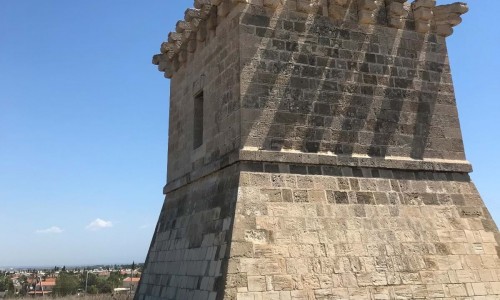
At the southern end of the promenade stands Larnaca Castle. It was founded in the Byzantine period, with the earliest written sources dating to the 14th century, and was rebuilt under the Lusignan king James I (1382–1398) to protect the town's harbour — the Genoese held Famagusta at the time, and the kingdom needed another major port.
Saint Lazarus and the old town
The Church of Saint Lazarus is the city's most important religious landmark and the reason Larnaca appears in Orthodox tradition at all. It was built in the late 9th century and is tied to Lazarus of Bethany, who according to that tradition settled in Cyprus after his resurrection and was appointed the first Bishop of Kition by Paul the Apostle and Barnabas.
The streets around the church are the oldest part of the city and the most rewarding to walk: narrow lanes, stone facades, balconies and small businesses, some restored into cafes and workshops and others left as they were. It is a quieter contrast to the seafront a few minutes away.
Kition, the city underneath
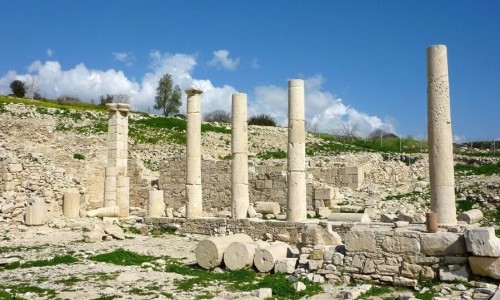
Larnaca is built on top of Kition, the ancient city-kingdom, and the archaeological site sits inside the modern town across two locations, Kathari and Pamboula. Material came out of the ground here from the 18th century onward, much of it through travellers and grave robbers — the Assyrian column of King Sargon II found here is now in Berlin, with a plaster copy shown in the Larnaca museum. Continuous excavation only began in 1929, with the Swedish Archaeological Expedition. The Larnaca Medieval Museum, housed in the castle, covers the later periods.
The salt lake and the flamingos
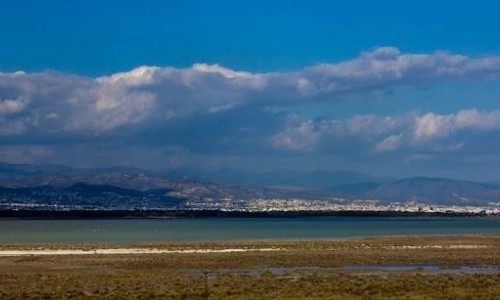
Just south-west of the city, the Larnaca Salt Lake is a completely different landscape from the seafront. Despite the singular name it is a network of four connected lakes — Aliki, the largest, along with Orphani, Soros and Spiro — covering roughly 2.2 square kilometres.
It is a protected wetland that supports around 85 bird species and works as a stopover on migration routes. Between November and March thousands of greater flamingos feed here on brine shrimp in the shallow salt water, alongside herons, cranes and waders. In high summer the lake often dries to a pale crust instead, so the season you visit changes the place entirely. There is more on the wider picture in our guide to birdwatching in Cyprus.
On the lake's west bank, about six kilometres from the city, stands Hala Sultan Tekke, the most important Muslim place of prayer on the island. It was built shortly before 1781 and reached its present form in 1816, and it holds the tomb of Umm Haram, a relative of the Prophet Muhammad. The mosque, the lake and the airport all sit within sight of one another.
Eating in Larnaca
Eating here follows the social rhythm of the city rather than the clock. A long meze arrives as a sequence of small dishes over an hour or more; halloumi, olives, dips, salads, grilled meat, seafood and fresh bread all belong to it. Bakeries matter as much as restaurants — a morning coffee and a fresh savoury pastry is as characteristic of Larnaca as a formal dinner, and considerably more common.
Beaches and the coast
Finikoudes is the convenient one, right against the centre. Mackenzie, just south towards the airport, is the livelier strip of beach bars and restaurants, and the coast further out runs from organised family beaches to quieter local ones. The full set is listed on beaches in Larnaca.
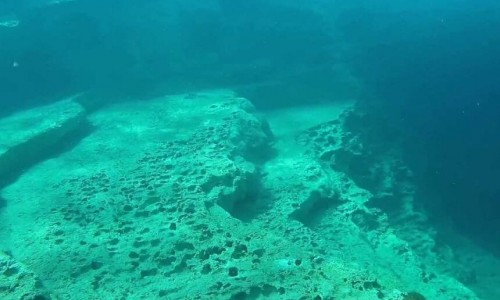
Offshore, the Zenobia is the reason a good number of divers come to Cyprus at all. The Swedish ferry, 172 metres long, sank outside Larnaca Port on 7 June 1980 during her maiden voyage, still loaded with 108 lorries, and is rated among the ten best wreck dives in the world.
Getting there and getting around
Larnaca International Airport is the island's principal gateway. Cyprus's original main airport was at Nicosia; it was lost in 1974, and airports were built at Larnaca and Paphos to replace it, with Larnaca serving both Larnaca and the capital. Details for both are on our Cyprus airports page.
Once you are in the city, most of the centre works on foot. A walk from Finikoudes through the old streets, past Saint Lazarus and back along the front covers nearly everything described above in an afternoon. Larnaca Marina sits at the northern end of the same seafront.
Beyond the city
Larnaca works well as a base. Lefkara, known for its lacework and silver, is the best-known village in the district, and the rest are listed under Larnaca villages. Mazotos Camel Park is an easy trip with children. Inland the district turns quickly to farmland and low hills, so a day can start with coffee on the seafront, run through the villages and finish back under the palms.
This site covers 178 places across the Larnaca district. Here is what is worth your time.
Things to do in Larnaca
The attractions, sites and landmarks of the Larnaca district.
Beaches in Larnaca
Every beach along the Larnaca coast, with how to reach it and what to expect.
Villages around Larnaca
The villages of the Larnaca district, inland and coastal.
Churches and monasteries in Larnaca
Byzantine churches, chapels and monasteries across the district.
- Panagia Theotokou Church (Titiotissa) - Kalavasos
- Panagia Eleousa Church - Kellia Village
- Church of Saint Lazarus (Agios Lazaros), Larnaca
- Panagia Petounta Chapel - Mazotos
- Agioi Anargyroi Church - Agioi Vavatsinias
- Agiou Lazarou Church - Larnaca
- Timios Stavros (Church of the Holy Cross), Lefkara Village
- Panagia Angeloktisti Church
Museums in Larnaca
Archaeological, folk and specialist museums in and around Larnaca.